Just a short distance from the romantic gondolas of St. Mark’s Square lies an 18-acre landmass shrouded in thick sea fog and absolute silence: Poveglia Island. While Venice welcomes millions of wanderers each year, this solitary island remains strictly off-limits to tourists, sealed behind naval patrols, rotting iron gates, and centuries of gruesome maritime history.
It is not merely an abandoned relic; local legend and soil studies suggest that over 50 percent of the island’s topsoil consists of human ash from centuries of biological quarantine.
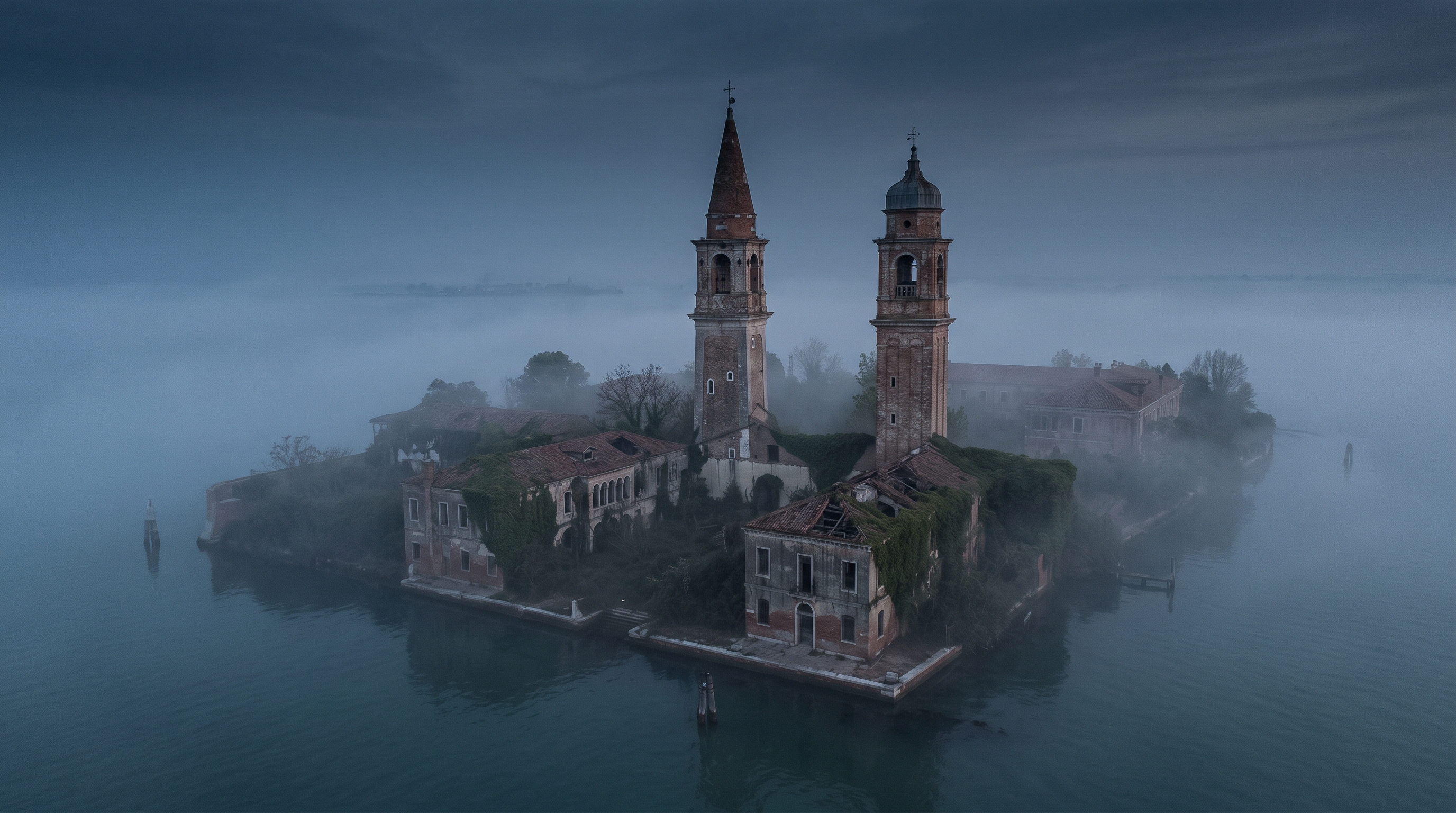 The derelict 18th-century bell tower and crumbling psychiatric pavilions of Poveglia Island, rising out of the Venetian Lagoon.
The Black Death: The Empire of Pestilence
Poveglia’s descent into darkness began in the 14th century when the Bubonic Plague, known as the Black Death, decimated Europe. Because Venice was the commercial epicenter of maritime trade, infectious outbreaks struck the city with catastrophic velocity.
To protect mainland survival, the Venetian Republic instituted the world’s first formal quarantine system (quarantena, meaning 40 days). In 1776, Poveglia was designated as a primary lazaretto—a containment station for arriving cargo and sick passengers:
- The Triage of No Return: Anyone displaying mild fever, cough, or swollen buboes was torn from their families and ferried to Poveglia.
- The Plague Pits: As mortality rates skyrocketed, traditional burials ceased. Thousands of victims were thrown into massive trench graves (fosse comuni) and set ablaze with quicklime.
- The Layer of Ashes: Historians estimate that over 100,000 plague victims perished on this solitary soil. Local fishermen still refuse to cast nets near Poveglia, wary of dragging human bones from the seabed.
The 1922 Psychiatric Hospital and the Mad Doctor
After the plague subsided, the island stood quiet until 1922, when the remaining quarantine buildings were converted into a long-term psychiatric asylum.
Patients transferred to the facility immediately reported hearing phantom church bells, disjointed whispers from the soil, and visions of plague victims rotting in the corridors. Because the patients were diagnosed with severe mental disorders, their claims were dismissed by doctors and staff.
 Rusted hospital beds and peeling paint inside the abandoned psychiatric ward, left untouched since 1968.
According to documented lore, the asylum’s chief physician began conducting rogue lobotomies and crude experimental brain surgeries using chisels and hand drills. The doctor allegedly went mad himself, claiming to be pursued by restless spirits before throwing himself—or being pushed—from the top of the island’s bell tower.
The hospital was shuttered permanently in 1968, leaving medical beds, autopsy slabs, and patient records behind to decompose in the salt air.
Why Is Visiting Poveglia Island Illegal?
Today, Poveglia is owned by the Italian state (Demanio Pubblico) and remains strictly closed to the public:
1. Structural Collapse
The buildings have decayed under decades of salt spray, winter storms, and ivy overgrowth. Roofs, staircases, and floorboards are on the verge of cave-ins, presenting lethal structural hazards.
2. Strict Maritime Bans
Italian authorities prohibit commercial water taxis from docking at the island. Private boat captains who ferry unauthorized visitors risk severe fines and the immediate revocation of their maritime navigation licenses.
3. Failed Auctions & Reclamations
In 2014, the Italian government attempted to auction a 99-year lease on the island to private investors for hotel development. The highest bidder intended to restore the property, but public outcry and spiraling restoration costs caused the plan to collapse, leaving Poveglia in state limbo.
How to Legally Experience Poveglia
While stepping onto the soil is illegal, travelers with a curiosity for dark heritage can still observe the island safely and within maritime law.
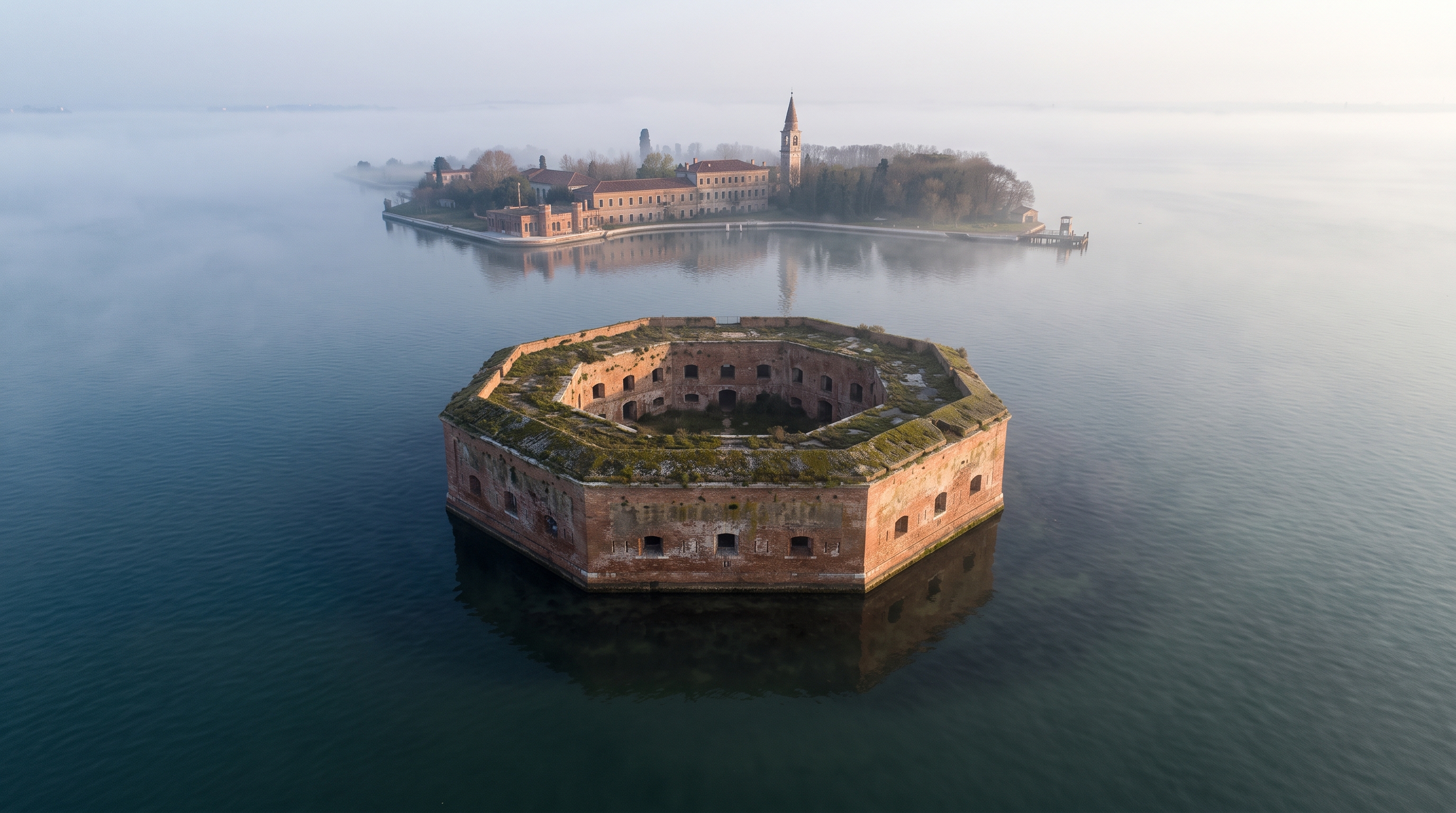 The fortified octagonal redoubt built into the water just south of Poveglia Island.
- Lagoon Boat Excursions: Private water taxi captains from the island of Lido can be chartered for a loop around Poveglia’s perimeter. You cannot dock, but you can photograph the octagonal defensive fort (Ottagono) and the crumbling bell tower from the water.
- View from Malamocco: For a distant shoreline vantage point, bike down to the coastal promenade of Malamocco on Lido island, where Poveglia’s silhouette looms across the narrow lagoon channel on foggy mornings.
The Verdict
Poveglia Island stands as a stark monument to humanity’s desperate battles against contagion and mental illness. Suspended between Venice’s glittering palaces and the open Adriatic Sea, it remains a forbidden time capsule—best observed with respect from the waterline.