Sprawling across the northwestern flank of Japan’s iconic Mount Fuji lies a dense primeval woodland known locally as Jukai (The Sea of Trees): Aokigahara Forest. When viewed from above, the vast canopy ripples in the wind like an endless ocean of emerald waves.
Step inside beneath the canopy, however, and the ocean winds vanish entirely. Visitors are immediately enveloped in an eerie, absolute silence. Rooted directly into jagged volcanic basalt rather than deep soil, Aokigahara is an extraordinary ecological marvel—and one of the most culturally solemn, intensely whispered-about dark tourism destinations on Earth.
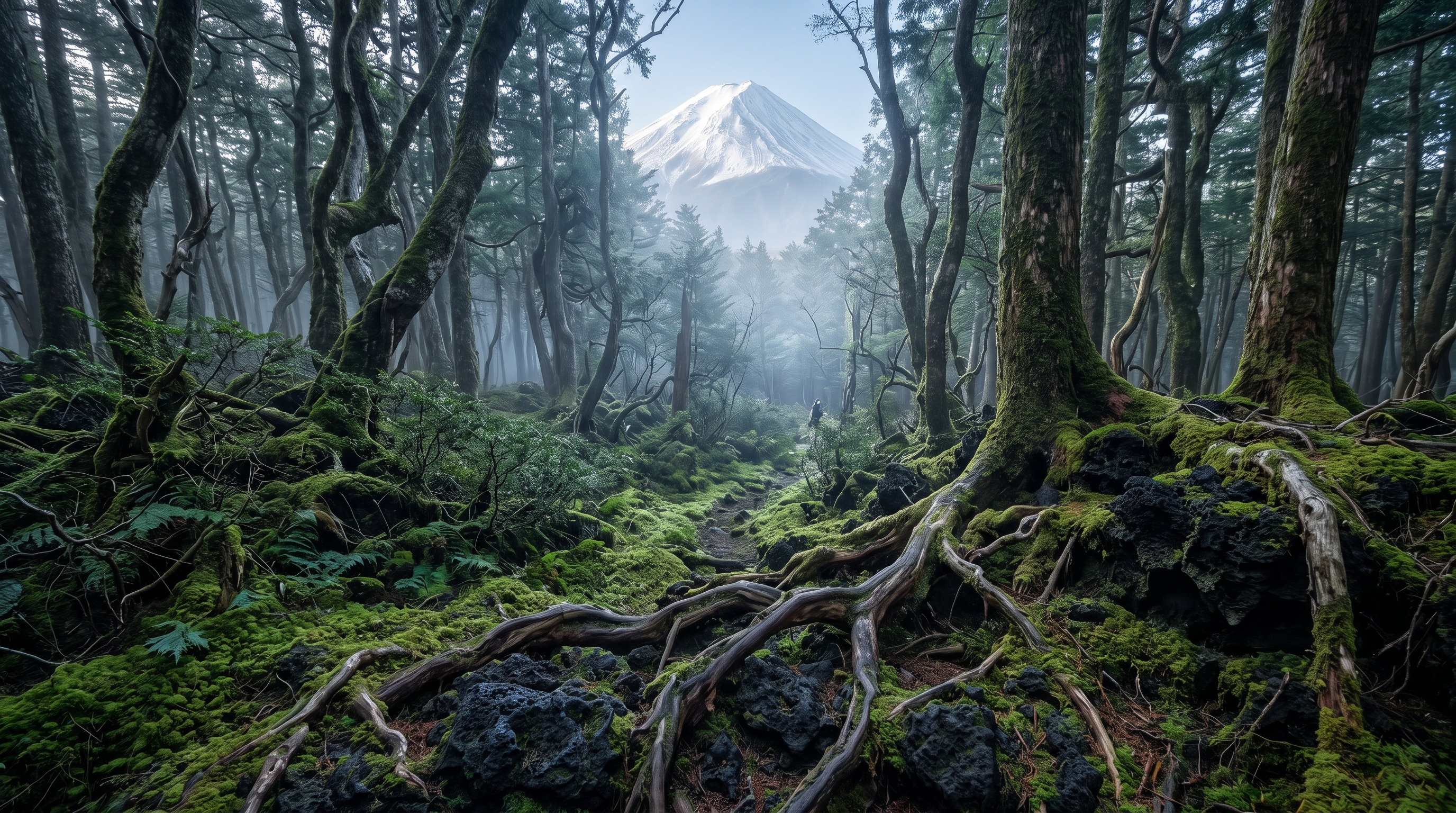 Twisted hemlock and cypress roots clutching porous volcanic basalt across the primeval floor of Jukai.
Born of Fire: The 864 CE Geological Anomaly
The mysterious atmosphere of Aokigahara is rooted primarily in its violent geological genesis. In 864 CE, Mount Fuji erupted catastrophically in an event known as the Jōgan Eruption. Massive rivers of molten lava spilled across the valley, filling existing lakes and cooling into a vast 30-square-kilometer plateau of hardened basalt.
Over the last 1,200 years, a dense forest colonized this inhospitable rock shelf:
- The Sound-Absorbing Floor: The hardened lava is honeycombed with millions of micro-cavities. This porous basalt acts as natural acoustic baffling, dampening ambient sound and footfalls to create an unnatural, sensory-depriving quiet.
- Above-Ground Root Systems: Because the solid lava sheet is impenetrable, tree roots cannot drill deep underground. Instead, they sprawl horizontally across the forest floor in gnarled, serpentine webs blanketed in thick green bryophyte moss.
- Magnetic Compass Drift: The volcanic stone contains exceptionally dense concentrations of natural magnetic iron ore (magnetite). While modern military-grade GPS generally functions, traditional analog magnetic compass needles frequently waver or point erratically when held close to the mineral-rich basalt.
The Lore of Ubasute and the Yūrei Spirits
Long before modern headlines, Aokigahara carried a somber footprint in Japanese cultural folklore. During brutal famines in feudal Japan (such as the Great Tenmei famine of the 1780s), local oral traditions recount the practice of ubasute—a desperate ritual where families carried ailing elders or infants into deep, trackless forests to perish so that younger members might survive.
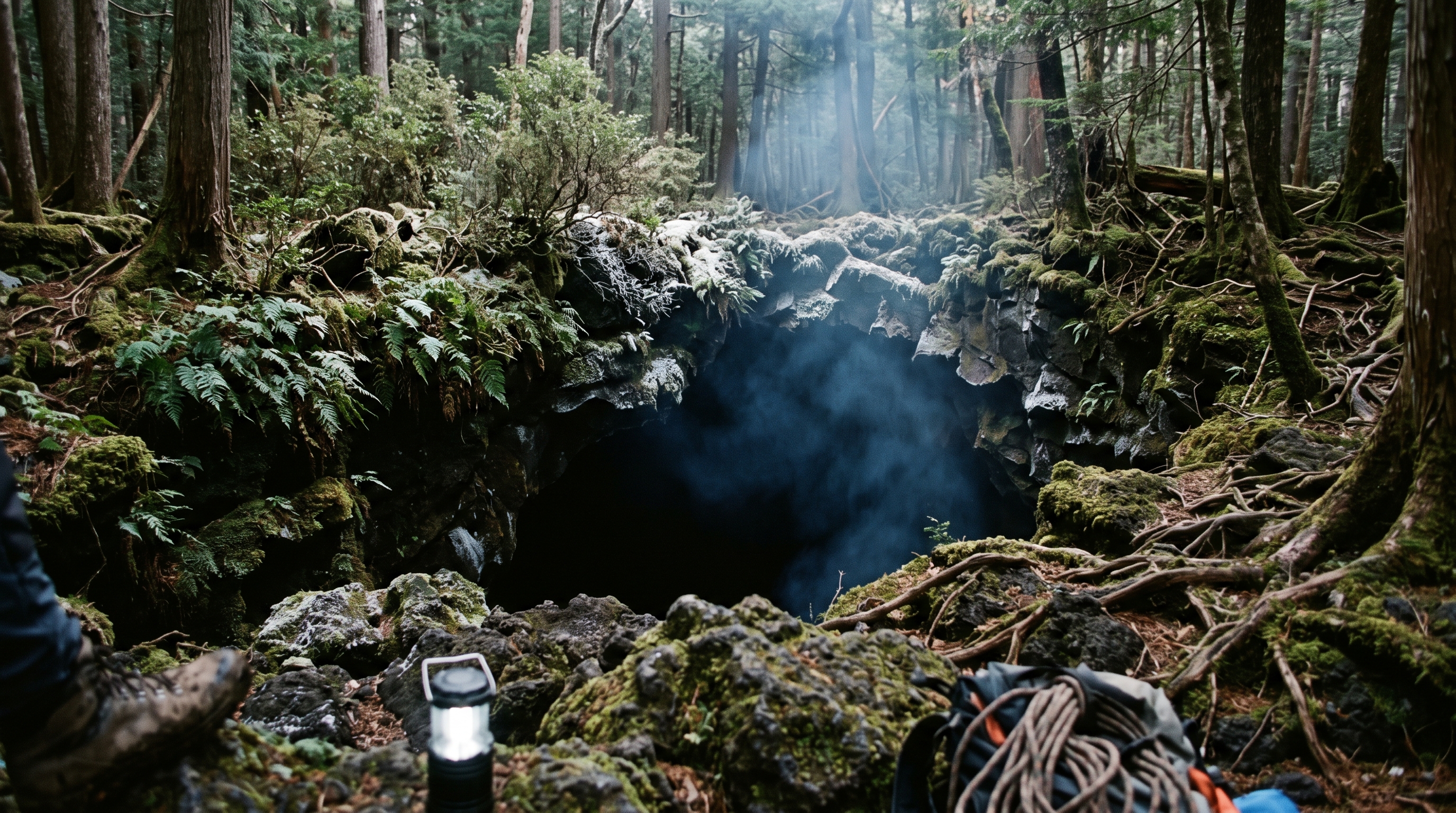 Natural volcanic lava tubes and ice caverns beneath the forest floor remain frozen year-round.
In Shinto and Buddhist beliefs, those who die violent or abandoned deaths become Yūrei—restless spirits unable to cross over into the ancestral realm. Generations of local foresters believed that these wandering souls lingered within the knotted canopies, luring disoriented travelers deeper into the trackless interior.
Tape Trails and Forest Wardens: The Modern Reality
In the mid-20th century, romanticized literature unfortunately popularized Aokigahara’s desolate interior. Today, local prefectural authorities, forest rangers, and volunteer Buddhist monks work tirelessly to preserve the sanctity of the woodland and protect vulnerable individuals:
- Tapes of No Return: Hikers exploring off-trail often encounter long ribbons of colored plastic tape (yellow, pink, and blue) tied to tree trunks. These ribbons are laid down by solitary search parties or explorers marking their path so they can navigate back through the disorienting, identical terrain.
- Lifeline Signboards: At primary trailheads, the Yamanashi prefectural government has erected discreet warning signs bearing emergency telephone numbers, reminding wanderers that life is precious and urging them to seek counseling.
- Ranger Patrols: Dedicated local patrols monitor parking lots and trail entrances daily, quietly intervening when solo travelers venture into the deep woods with minimal outdoor gear.
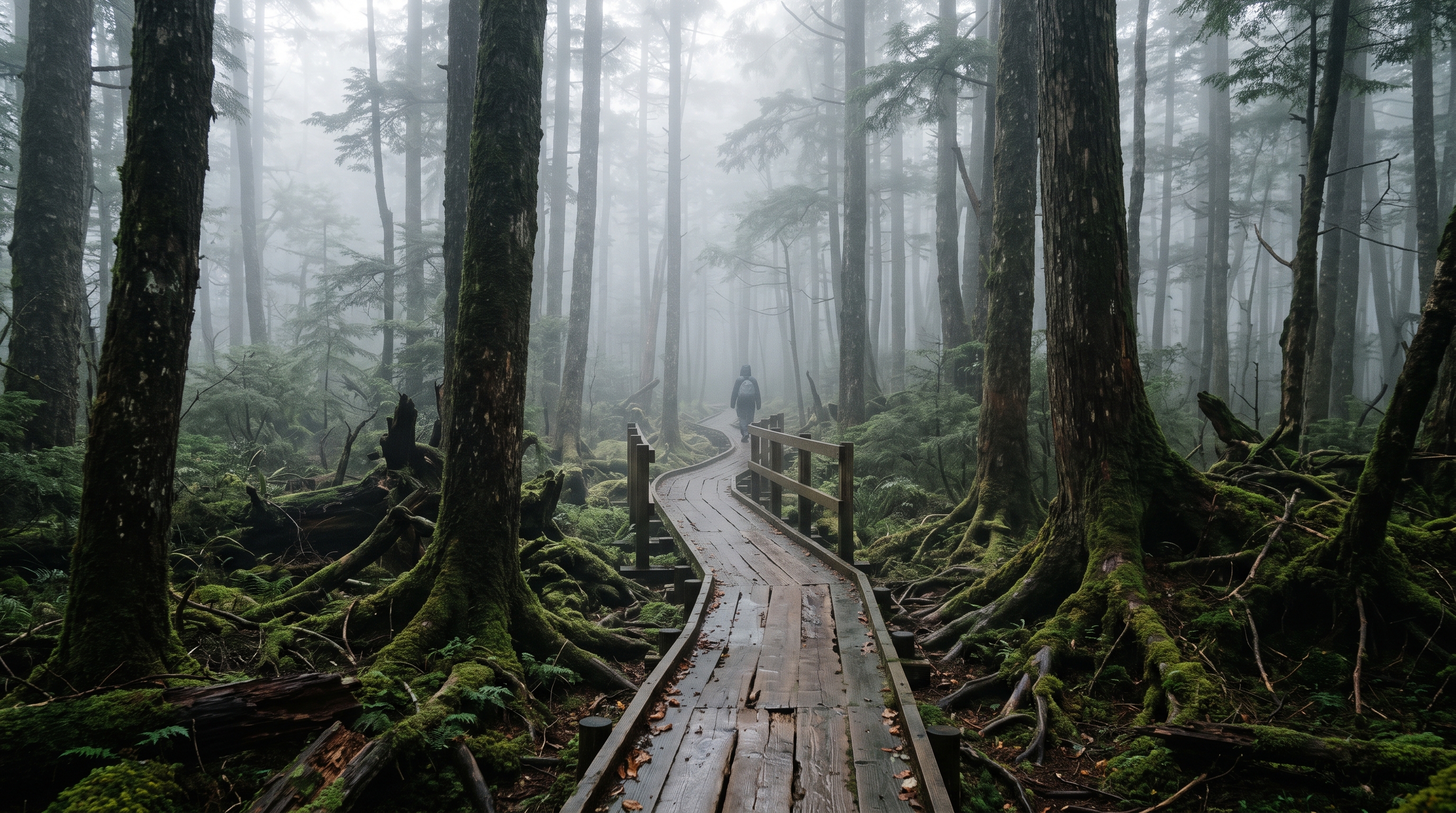 Official designated walking trails provide a safe, respectful way to appreciate the ancient woodland without disturbing off-path ecosystems.
Expedition Field Guide: How to Visit Safely and Respectfully
Visiting Aokigahara requires emotional maturity, respect for local customs, and strict wilderness discipline.
Getting There
- Access Point: Take the highway bus or train from Tokyo to Kawaguchiko Station. From there, board the Saiko Sightseeing Bus (Green Line) to reach the primary trailheads around the Narusawa Ice Cave or Fugaku Wind Cave.
- Designated Routes: The forest maintains well-marked wooden trails such as the Jukai Nature Trail. These boardwalks wind safely through the volcanic fields, passing ancient lava blowholes and subterranean ice caverns.
Critical Safety Protocols
- Never Deviate from the Trail: Stepping off the marked path is strictly discouraged. The ground is riddled with moss-hidden sinkholes and vertical volcanic fissures up to several meters deep. The sheer uniformity of the canopy makes visual landmark navigation virtually impossible.
- Leave No Trace: Do not leave plastic tape, touch ribbons, or litter. The fragile moss ecosystem takes decades to regenerate once crushed under boots.
- Respect Local Culture: Aokigahara is not a playground or a haunted house attraction. Approach the site with quiet reverence for the lives lost, the sacred stature of Mount Fuji, and the ongoing conservation efforts of the local community.
The Verdict
Stripped of sensationalism, Aokigahara remains one of the world’s most hauntingly beautiful ecological sanctuaries. To walk its quiet boardwalks is to experience the extraordinary power of nature reclaiming scarred volcanic earth—a profound encounter with silence at the sacred base of Japan’s greatest peak.