On April 25, 1986, Pripyat was a thriving Soviet showcase city. Designed as an “atomgrad” for engineers and workers of the nearby Chernobyl Nuclear Power Plant, it boasted broad tree-lined avenues, modernist cultural palaces, olympic swimming facilities, and an average resident age of just 26 years old.
Fewer than forty-eight hours later, Reactor No. 4 exploded during a flawed safety test, spewing an apocalyptic radioactive plume into the atmosphere. The 49,360 residents were ordered to pack small bags for an evacuation that was supposedly temporary—lasting only “three days.”
No one ever returned. Today, Pripyat stands sealed inside the 2,600-square-kilometer Chernobyl Exclusion Zone, a silent, disintegrating museum of the late Soviet Union.
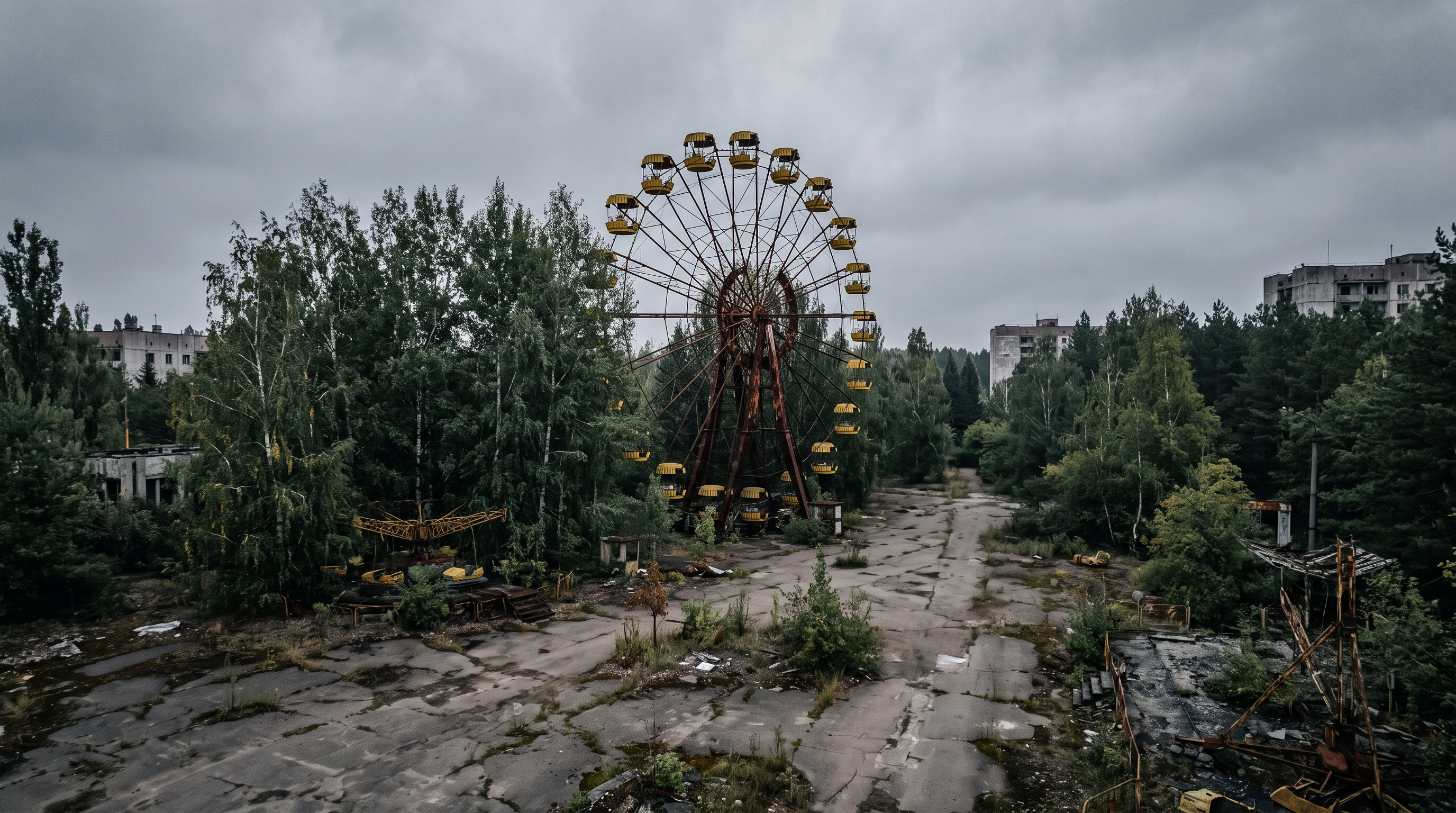 The rusting yellow Ferris wheel of the Pripyat amusement park, scheduled to open on May Day 1986, but never boarded by a single child.
The Evacuation: Life Frozen in Mid-Sentence
When 1,200 municipal buses from Kiev converged on Pripyat on the afternoon of April 27, residents were told to leave all heavy belongings, pets, and family heirlooms behind to prevent radioactive contamination from spreading.
Because the exit was rushed, the city remains an eerie time capsule of everyday 1980s life:
- Abandoned Classrooms: School No. 3 still holds rows of wooden desks with open notebooks, Soviet Cyrillic maps peeling off the walls, and hundreds of Soviet civilian gas masks carpeted across the floorboards.
- The Azure Swimming Pool: Incredibly, the Azure Pool remained in operation until 1998, utilized by nuclear liquidators and monitoring teams before being abandoned to rust, cracked tile, and dry concrete.
- The Hospital Basement: The lowest subterranean room of Pripyat City Hospital still holds the firefighter uniforms discarded on the night of the explosion. To this day, the garments emit lethal spikes of ionizing gamma and beta radiation that make entry without protective gear hazardous.
The Empire of Moss: Nature Reclaims Concrete
Without human activity, heating systems, or roof maintenance, water and frost heave have systematically pulverized Pripyat’s brutalist architecture. Concrete floors have softened into fertile humus, and birch trees now sprout directly through the parquet floors of tenth-story luxury apartments.
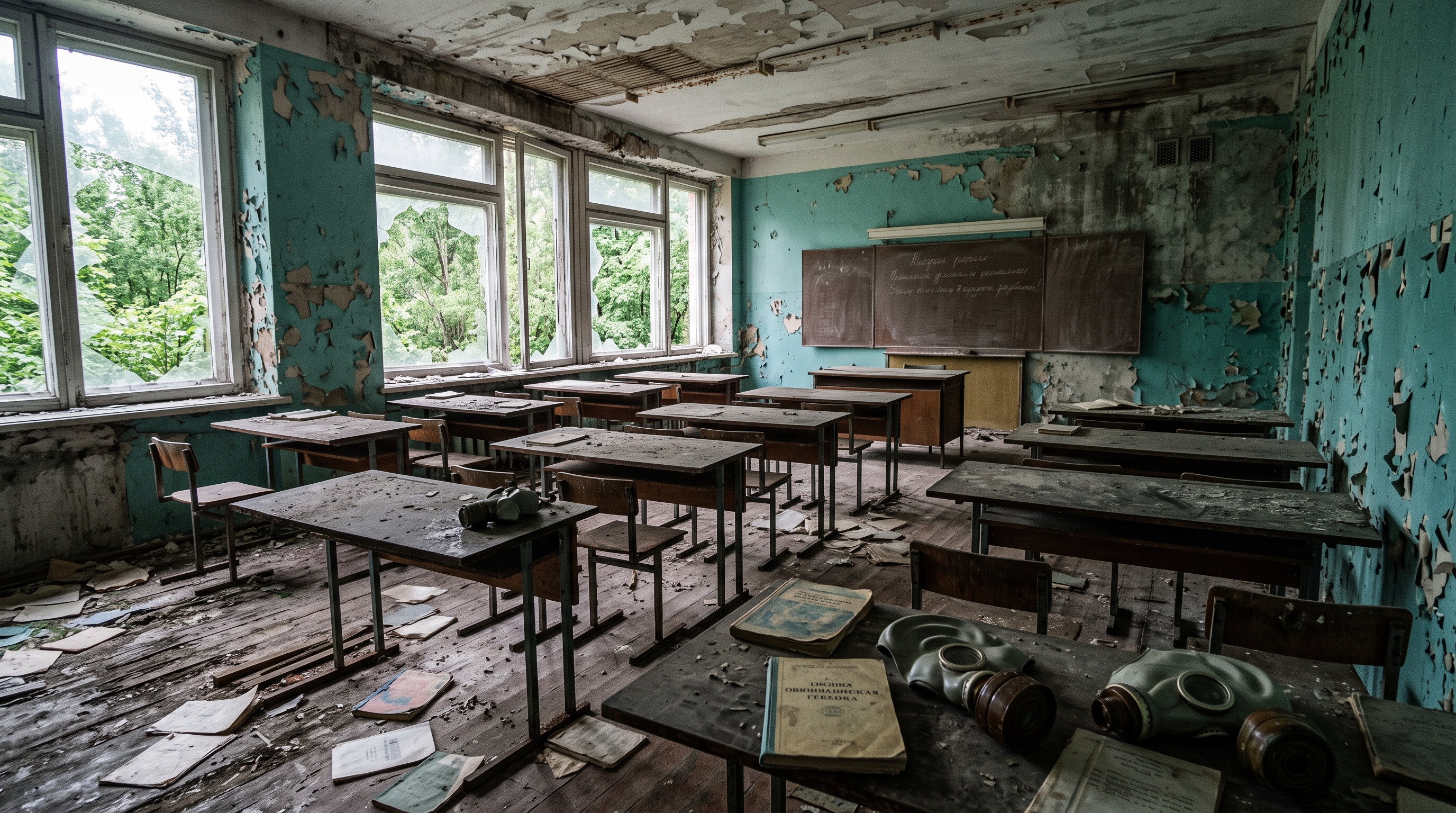 Decaying instructional classrooms in Pripyat Middle School, silent since the spring of 1986.
Surrounding the city, the Chernobyl Exclusion Zone has inadvertently transformed into Europe’s largest accidental nature reserve:
- The Red Forest: While pine trees closest to the reactor turned reddish-brown and perished from acute radiation dosage within weeks, resilient wildlife rebounded.
- Apex Predators: Eurasian lynx, brown bears, wild boars, and endangered Przewalski’s horses roam the abandoned avenues in numbers not seen in Western Europe for a century.
- Microbiome Adaptations: Scientists studying the zone have discovered mutated tree frogs producing higher concentrations of dark melanin pigment to neutralize radiation damage, alongside radio-trophic black fungi capable of harnessing ionizing energy.
The Decaying Skyline: Sarcophagus and Structural Decay
In 2016, international engineers completed the monumental New Safe Confinement—a massive steel arched hangar spanning 257 meters wide and 108 meters high, slid over the crumbling original 1986 Soviet sarcophagus to seal Reactor No. 4 for the next century.
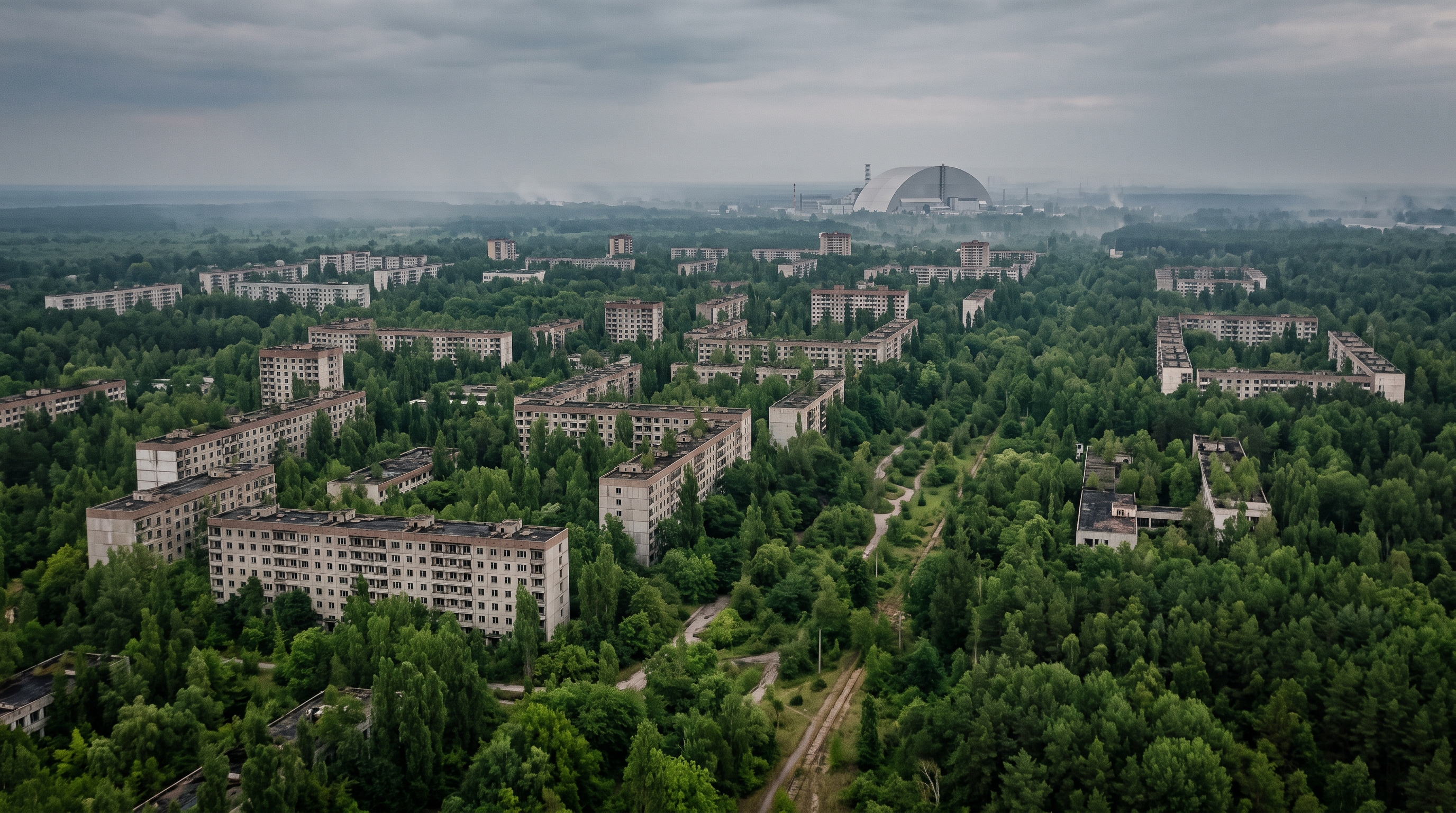 Looking out across Pripyat: decaying residential towers swallowed by an endless sea of birch and pine.
Yet while the reactor is locked away, Pripyat itself is on borrowed time. Winter freezes and summer humidity have severely compromised the structural integrity of the prefabricated block apartments (panelki). Multi-story staircases have collapsed, and several schools have partially caved in.
Expedition Field Guide: Radiation & Travel Realities
Historically, certified tour operators led heavily monitored excursions into the zone, enforcing strict radiation hygiene protocols.
Essential Radiation Hygiene
- Personal Dosimeters: All visitors wore digital Geiger counters (dosimeters). While typical ambient radiation on paved routes hovered near normal background levels (0.15–0.30 µSv/h), walking over moss patches or drainage ditches caused readings to jump dozens of times higher.
- Strict Contamination Rules: Eating, drinking, or smoking outdoors was strictly prohibited. Touching metal, sitting on the ground, or picking up artifacts were forbidden offenses to prevent ingesting radioactive dust particles.
- Exit Scanning Portals: Before exiting the Exclusion Zone perimeter, every visitor had to pass through Cold War-era chisto radiation portal monitors at the Dityatki checkpoint to ensure zero personal contamination.
The Verdict
Pripyat is not merely a ruin; it is a profound monument to technological fallibility and the hubris of empire. It offers humanity a rare, sobering glimpse into an Earth without us—a radioactive world where silent steel wheels rust into dust while the wild forest relentlessly marches on.