Beneath the surreal, wind-sculpted fairy chimneys and sun-bleached plateaus of Turkey’s Cappadocia region lies an architectural achievement that defies conventional imagination. While surface travelers admire the dramatic volcanic landscape, an entire subterranean civilization is carved directly into the soft, porous volcanic tufa rock below.
The largest and deepest excavated underground complex in the region is Derinkuyu Underground City. Plunging an astonishing 85 meters (280 feet) straight down into the earth across 18 distinct subterranean levels, this colossal labyrinth once functioned as a fully self-sustaining metropolis capable of sheltering up to 20,000 people, complete with livestock, water wells, wine presses, and places of worship.
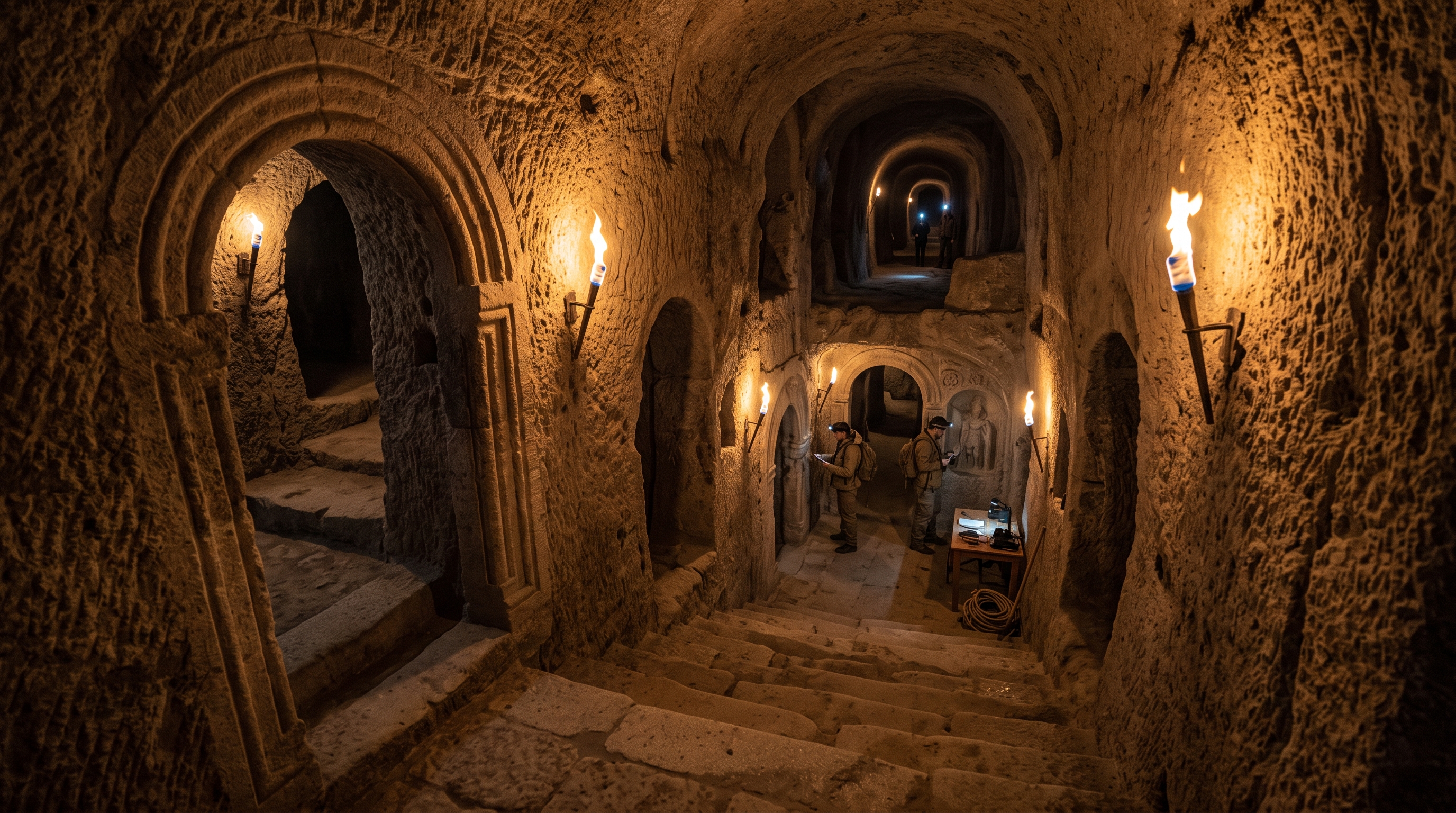 Narrow carved volcanic stone corridors and vaulted archways descending deep into the lower tiers of Derinkuyu.
The Accidental Discovery: 1963
Despite housing thousands of people across millennia, the vast subterranean city remained entirely hidden from modern view until the autumn of 1963.
A local resident in the modern town of Derinkuyu was remodeling his basement and decided to knock down a crumbling stone wall. Behind the masonry lay an unexpected void—a dark, cool subterranean corridor. Further excavation revealed an endless network of interconnected tunnels, rooms, and multi-level shafts that had been sealed and forgotten for centuries.
Archaeologists quickly descended into the abyss, unearthing a masterclass in ancient engineering and survival architecture.
Engineering the Depths: Life Underground
Derinkuyu was not merely a cluster of damp hiding caves; it was an intricate, highly organized urban society designed to withstand prolonged military sieges by Arab armies, Mongol hordes, and invading Persians:
- The Millstone Security Doors: To block attackers from penetrating the lower levels, each tier could be sealed independently from the inside using massive circular stone wheels (millstones) weighing between 200 and 500 kilograms. These stone doors featured a small peephole in the center, allowing defenders to survey intruders while remaining completely protected.
- The Vital Airshafts: Engineers carved more than 50 vertical ventilation shafts stretching from the deepest chambers all the way to the surface. This sophisticated natural air-flow system ensured continuous oxygen circulation and fresh air across all 18 levels, even when thousands of people were packed inside.
- Fresh Water Supply: Deep underground wells supplied pristine drinking water independent of surface rivers, preventing enemies from cutting off water supplies or poisoning surface reservoirs.
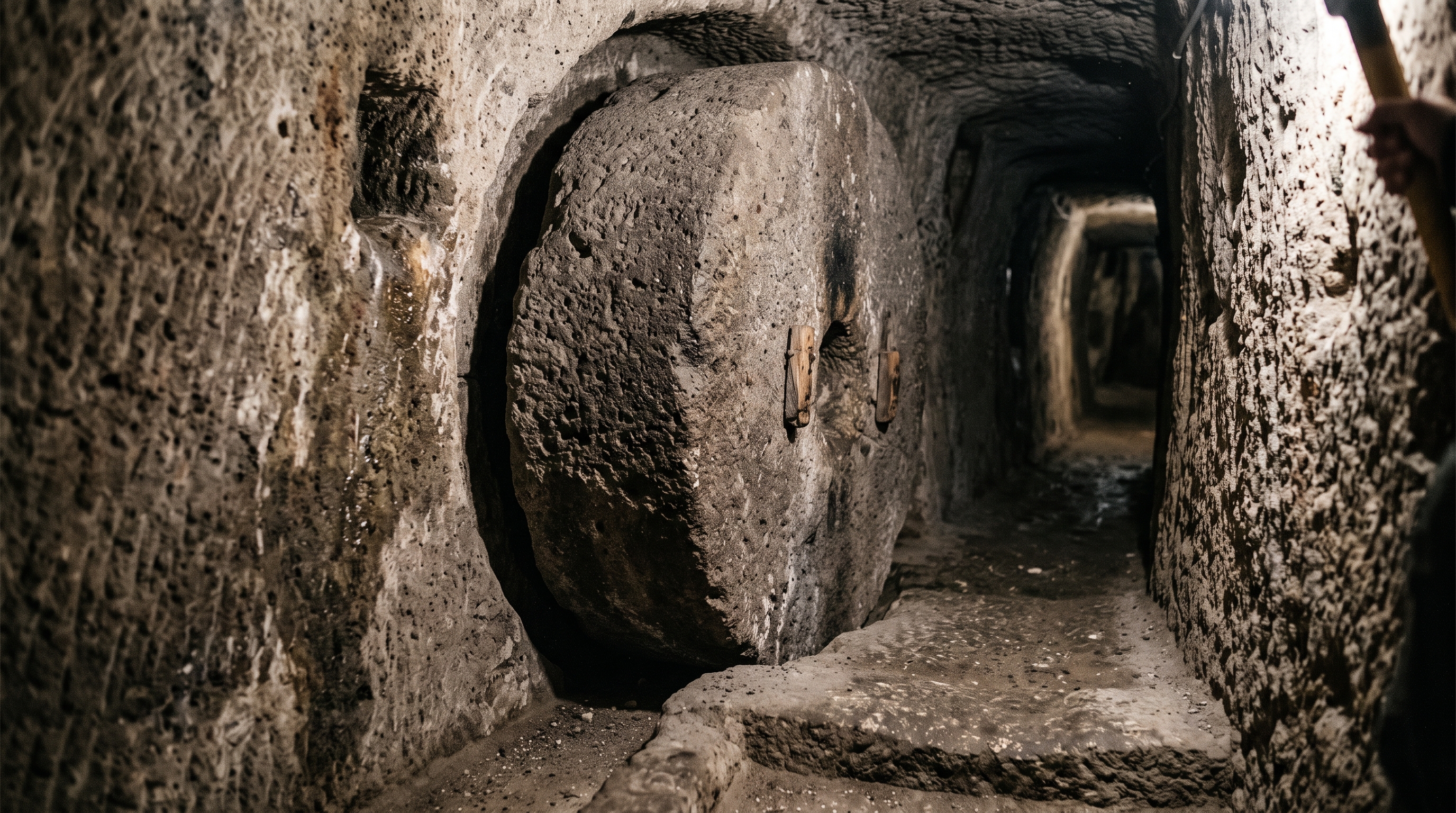 A heavy stone rolling door mechanism designed to seal off corridors from invading raiders.
Inside the Subterranean Metropolis
Descending through the narrow, sloping stone stairwells reveals specialized architectural chambers dedicated to every facet of daily life:
- Stables on the Upper Levels: The topmost levels were intentionally reserved for livestock. Keeping horses and cattle close to the surface minimized foul odors from penetrating deep residential quarters and kept heavy animals from navigating precarious steep stairs.
- The Subterranean Cruciform Church: Located on the seventh level is a magnificent vaulted church carved in the shape of a cross, measuring roughly 20 by 9 meters, demonstrating the spiritual resilience of the early Christian communities who sought refuge here during Roman persecutions.
- Wine & Oil Presses: Specialized rooms featuring carved stone troughs and basins allowed inhabitants to crush grapes and extract linseed oil safely out of sight of raiding armies patrolling the plains above.
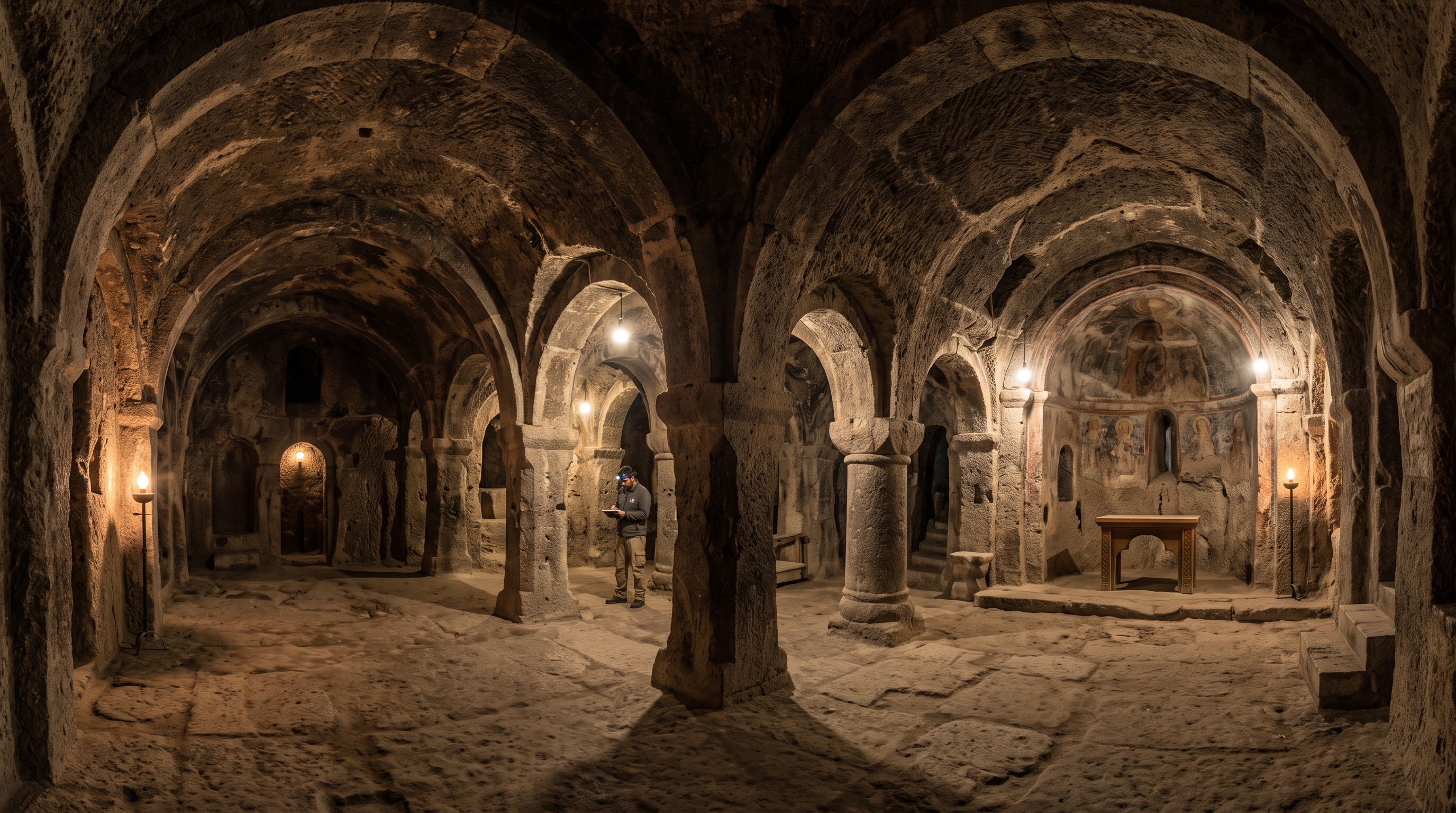 A historic vaulted stone chamber utilized as a sanctuary and place of worship deep within the earth.
Expedition Field Guide: How to Visit Derinkuyu
Visiting Derinkuyu is an awe-inspiring experience, but navigating its subterranean depths requires mindfulness of physical space and claustrophobia.
Getting There
- Base Camp: Most travelers base themselves in the historic cave-hotel towns of Göreme or Ürgüp.
- Transit: Derinkuyu is located roughly 30 kilometers south of Nevşehir. Regular local buses (dolmuş) or guided historical day tours run daily from Göreme directly to the site entrance.
Visitor Safety & Preparation
- Low Ceilings & Narrow Passages: While main tourist pathways are well-lit and widened for foot traffic, some connecting corridors require ducking or walking in single-file crouches. Visitors with severe claustrophobia or limited mobility should check accessibility limits before descending.
- Constant Cool Climate: Regardless of blistering summer heat on the surface, the interior temperature inside Derinkuyu remains a constant, damp 13°C (55°F) year-round. Bring a light jacket or fleece layer.
- Wear Sturdy Footwear: The ancient stone steps can be polished, uneven, and slightly damp from condensation. Supportive walking shoes with good grip are mandatory.
The Verdict
Derinkuyu Underground City stands as a monumental testament to human ingenuity and the instinct for survival in the face of relentless adversity. To walk its carved corridors is to leave the modern sunlit world behind and bear witness to an entire civilization that successfully carved an empire into the quiet stone of the earth.