South of the chaotic sprawl of Mexico City lies Xochimilco, an ancient network of canals and artificial agricultural islands (chinampas) engineered by the Aztecs over half a millennium ago. While most weekend travelers flock to the main waterways aboard colorful, music-filled wooden party boats (trajineras), deep in the labyrinthine back-channels where the music fades into total silence lies an unsettling enclave: La Isla de las Muñecas (The Island of the Dolls).
Tied to weeping willows, nailed to wooden shack facades, and dangling from wire nooses are hundreds of decomposing, weather-beaten dolls. With hollow eyes, dismembered limbs, and spiderwebs choking synthetic hair, they hang in silent vigil over the murky canal waters.
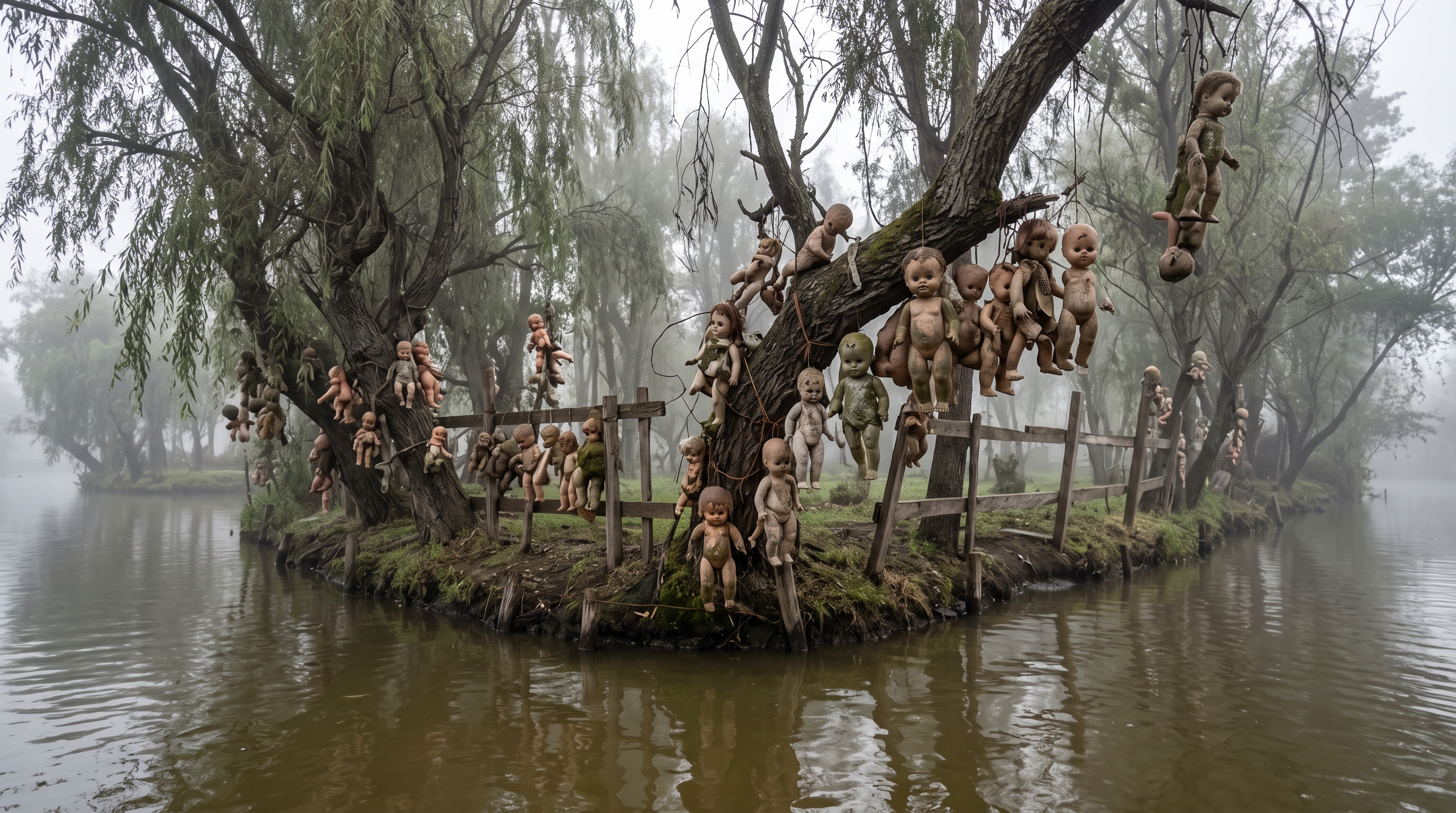 Weathered dolls with cracked porcelain faces and moss-stained plastic skin hang from the branches of Isla de las Muñecas.
The Tragedy of Don Julián Santana Barrera
The dark history of the island is the work of a solitary recluse named Don Julián Santana Barrera. In the early 1950s, Don Julián abandoned his wife, family, and society to live a life of ascetic isolation on a secluded chinampa deep within the Xochimilco marshes, surviving by growing corn and vegetables.
According to local oral history, shortly after settling on the island, Don Julián discovered the drowned body of a young girl trapped in the canal reeds near his shoreline. Haunted by his inability to save her, he began to experience nocturnal terrors:
- The Phantom Presence: He reported hearing the frantic splashes, cries, and disembodied footsteps of the young girl pacing through the tall swamp reeds around his wooden cabin at night.
- The First Talisman: Days after the drowning, he spotted a white plastic doll floating down the murky canal. Believing the doll belonged to the deceased child, he retrieved it and tied it to a tree branch near the water as a gesture of peace to placate her restless spirit.
- The 50-Year Obsession: Rather than appeasing the entity, Don Julián became consumed by the belief that the island was besieged by wandering souls. He began trading his farm vegetables in town for discarded, broken dolls fished out of municipal garbage piles and canal flotsam, systematically nailing them to every available tree, post, and wall across his island.
The Macabre Ecology: Decaying Sentinels
Don Julián never attempted to clean, repair, or restore the dolls he scavenged. He welcomed their wear, asserting that broken dolls carried more spiritual weight.
Over half a century of relentless exposure to tropical humidity, torrential seasonal rains, baking highland sun, and predatory insects transformed the island into a surreal outdoor gallery of organic decay:
- Entomological Hives: Wasps and mud daubers regularly build nests inside the hollow craniums, emerging through cracked eye sockets.
- Sun-Bleached Horror: Decades of UV radiation have peeled vinyl skin into cracked, blistered textures resembling third-degree burn tissue, while canal algae stains torsos with streaks of dark green and black moss.
- Whispers in the Reeds: Local boatmen (remeros) whisper that the dolls whisper to each other at dusk, turn their heads to track passing canoes, and blink unblinking plastic eyes at night.
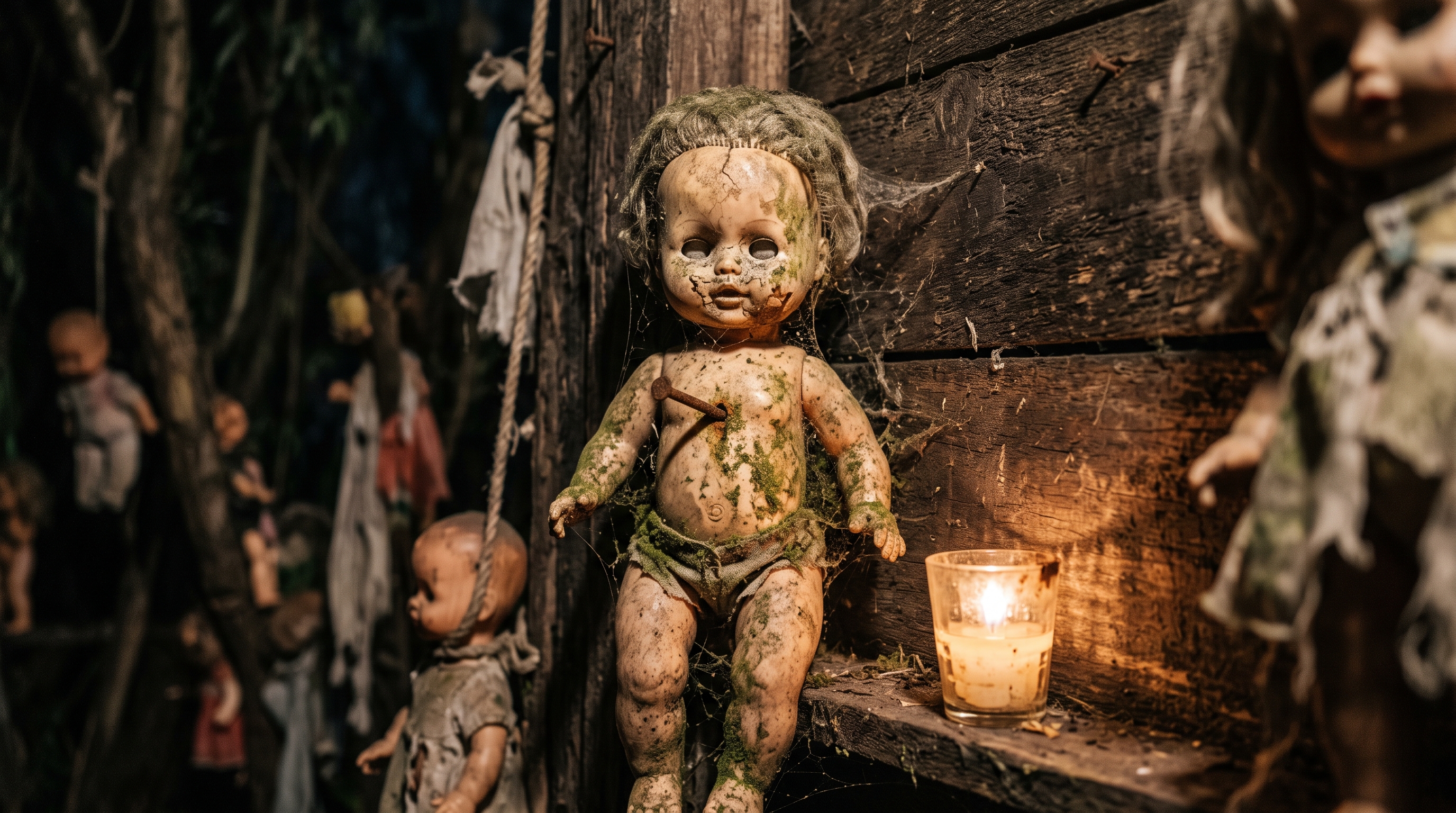 A weathered doll nailed to Don Julián’s original wooden cabin, surrounded by candles, coins, and visitor offerings.
The Eerie Parallel: The Death of Don Julián
For decades, Don Julián lived largely in obscurity, seen only by occasional fishermen. By the late 1990s, eco-tourists and paranormal investigators began catching wind of the bizarre shrine, occasionally paying him small donations for permission to dock.
The dark story concluded with an eerie historical symmetry in April 2001.
Don Julián, then 86 years old, had been fishing on the canal bank with his nephew Anastasio. He confided to his nephew that the river spirits were singing to him again and that the water mermaids were calling him to join them beneath the surface. When Anastasio returned from tending crops nearby, he found Don Julián’s lifeless body floating face-down in the canal—at the exact spot where the young girl had drowned fifty years earlier.
The cause of death was ruled a heart attack that led to drowning, but among canal locals, the lore was cemented: the spirits of the island had claimed their caretaker.
Expedition Field Guide: How to Visit Responsibly
Reaching the authentic Isla de las Muñecas requires careful navigation, as commercial boat operators frequently prey on uninformed tourists.
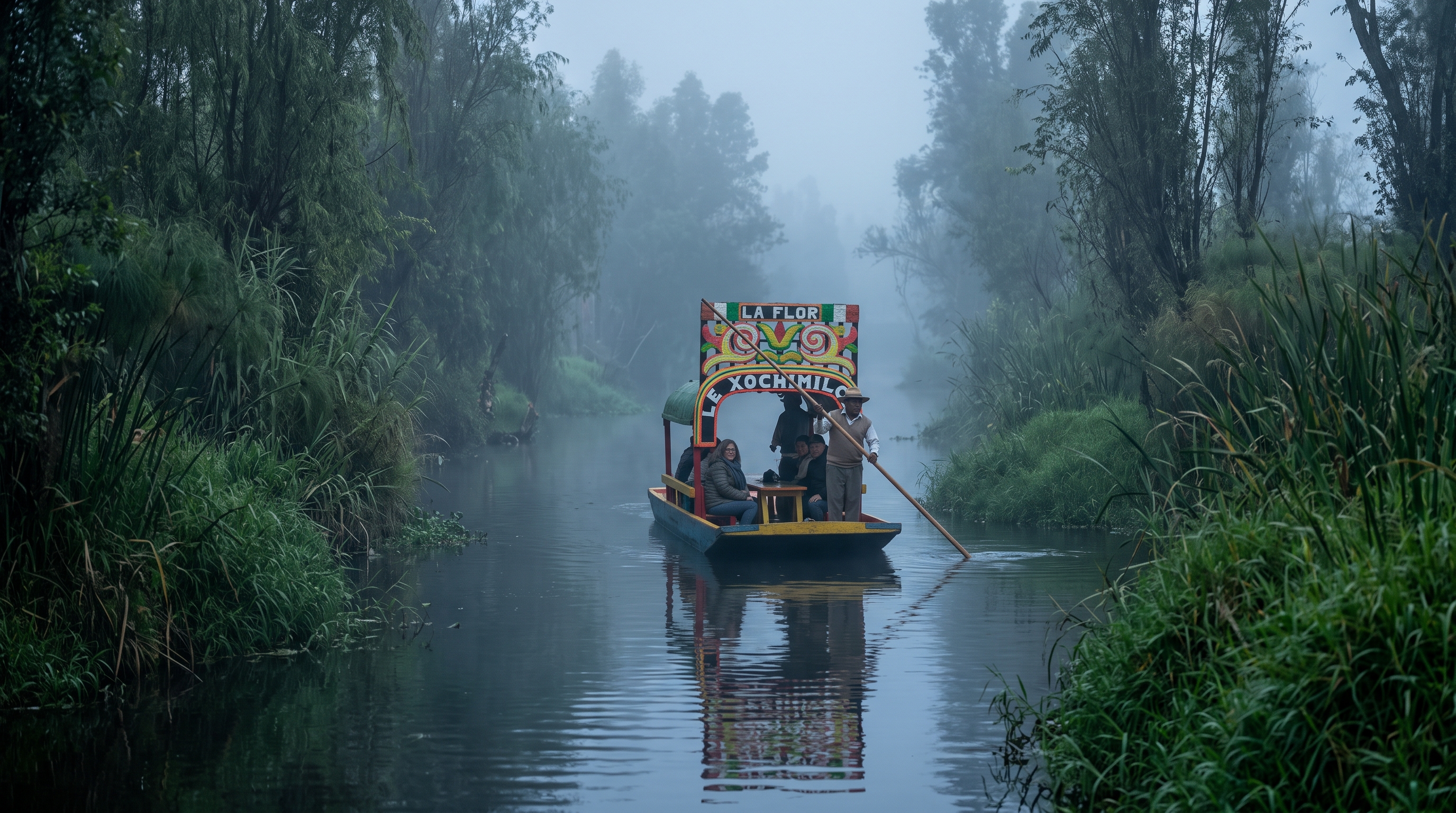 Navigating the quiet, narrow waterways of Xochimilco far beyond the party boat zones.
Spotting the “Fake” Islands
- The Replicas: Due to the popularity of the site, several unscrupulous boat operators have created “replica” doll islands along the central canals, charging tourists entry for shallow imitations.
- The Real Location: The authentic chinampa of Don Julián is located roughly 18 kilometers south of the central tourist piers, tucked deep inside the Reserva Natural de Xochimilco.
How to Charter a Boat
- The Best Embarcadero: Avoid the crowded central piers (like Nativitas). Head instead to Embarcadero Cuemanco or Embarcadero Fernando Celada.
- Transit Time: A round-trip journey to the authentic island takes between 3.5 to 5 hours of manual punting through silent, ecological canals. Confirm with your remero (boat driver) explicitly that you are heading to La Original Isla de las Muñecas.
- Visitor Etiquette: Entry to the island carries a modest conservation fee paid directly to Don Julián’s surviving family members, who maintain the property. Visitors frequently bring a small doll, coin, or candle as an offering to leave behind at the central shrine.
The Verdict
Isla de las Muñecas is not a manufactured horror attraction or a Hollywood prop set. It is a genuine, heart-wrenching physical manifestation of grief, mental isolation, and folk mysticism. To step onto its spongy, root-bound soil and look into hundreds of hollow plastic gazes is to enter a world where the boundary between life, death, and folklore has completely dissolved.