High in the rugged Cordillera Central mountain range of northern Luzon, five thousand feet above sea level, lies the tranquil, pine-clad mountain municipality of Sagada.
Surrounded by terraced rice paddies and cool highland mists, Sagada is home to one of humanity’s most poetic and vertigo-inducing mortuary traditions: The Hanging Coffins of Echo Valley.
Wandering along the pine-needle paths beneath the towering karst cliffs of Echo Valley, visitors crane their necks upward to witness an extraordinary sight: dozens of hollowed-out wooden pine coffins nailed to sheer limestone precipices, lashed with iron wire and rot-resistant jungle vines, suspended dozens of feet above the valley floor.
Far from an abandoned graveyard, this cliffside necropolis represents an active, two-thousand-year-old spiritual covenant between the indigenous Kankanaey Igorot elders and the spirit world.
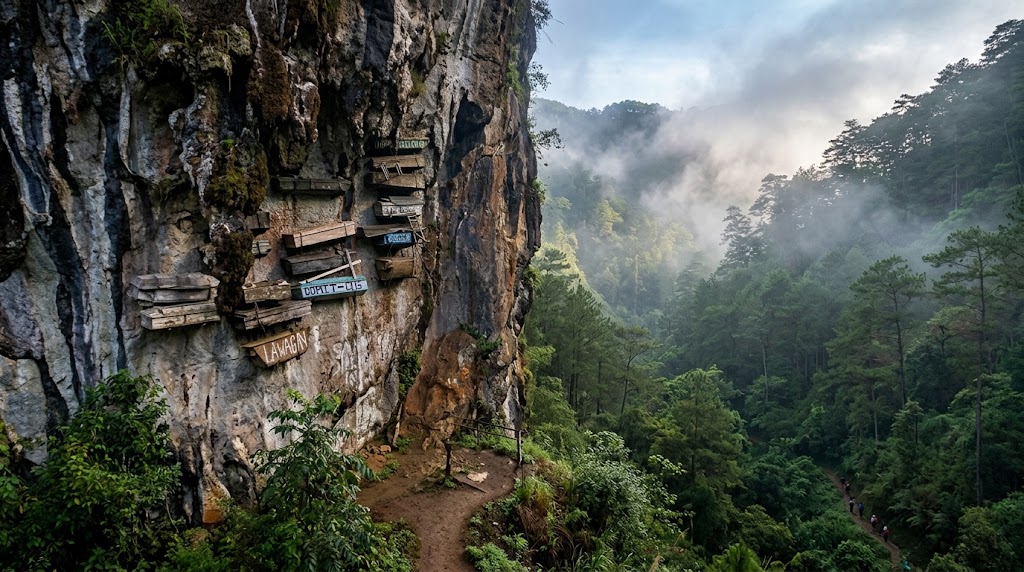 The vertical limestone amphitheater of Echo Valley, where ancestral wooden coffins hang suspended above the forest canopy.
The Cosmology of Elevation: Why Hang the Dead?
While many civilizations bury their deceased deep beneath the soil, the indigenous mountain peoples of Sagada inverted the paradigm:
- Proximity to the Spirit Realm (Anitos): The Igorot believe that the soul (kagan) embarks on an arduous celestial journey after death. Suspending bodies high on cliff faces brought the ancestors physically and spiritually closer to their ancestral deities (anitos) and the open sky, facilitating effortless spiritual transit.
- Protection from Ground Threats: Historically, burying corpses in the earth carried severe earthly perils:
- Predators and Floods: Tropical mountain deluges during typhoon seasons regularly saturated the ground, risking waterlogging and putrefaction. Elevated karst walls kept the timber dry.
- Headhunting Raids: In pre-colonial centuries, rival mountain tribes practiced ritual headhunting. Placing ancestors high on inaccessible cliffs protected ancestral remains from desecration and skull-taking.
- Conserving Agricultural Loam: In the steep Cordillera highlands, arable farmland for rice and sweet potatoes was scarce. Dedicating precious fertile soil to buried cemeteries was considered an unsustainable waste of community survival ground.
The Mortuary Rites: The Sangadil and the Fetal Return
The physical journey to the cliff face was governed by strict, sacred ritual choreography:
- The Living Tree Carving: Traditionally, an elder carved their own coffin years before death, hollowing out a single trunk of native Benguet pine (Pinus kesiya). If the elder was too infirm, family members completed the carving under their direction.
- The Death Chair (Sangadil): When an elder passed, their body was not laid flat. Instead, the deceased was bound in a seated position to a wooden “death chair” crafted from freshly cut pine branches.
- The Smoking Ritual: For several days, the corpse was gently cured and preserved using smoke from slow-burning fragrant pine cones, tobacco leaves, and green wood embers, halting immediate decomposition while community members paid their final respects through epic ancestral chants (bayun).
- The Fetal Posture: Before placement in the coffin, the bones of the deceased were ritually folded into a tight fetal position—knees tucked up to the chin—mirroring the posture of an unborn infant in the womb. The Igorot believed that humans must depart this world in the exact posture they entered it.
On the final journey, younger kin carried the cloth-wrapped body to the cliff base, jostling to touch the corpse; local lore holds that receiving a drop of the elder’s fluids during the procession bestowed agricultural luck and physical stamina.
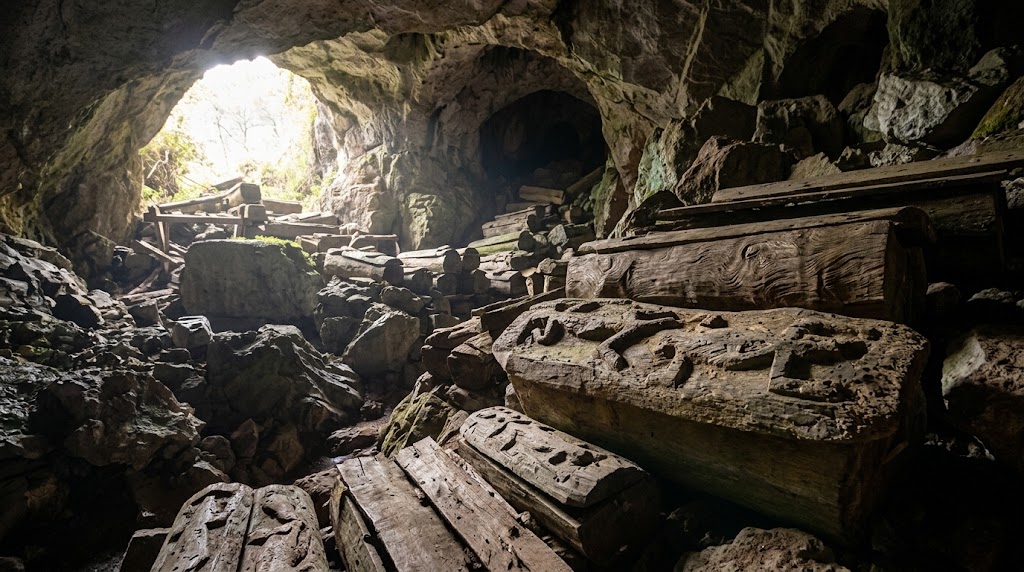 The cavernous entrance of Lumiang Burial Cave: centuries of stacked pine log coffins bearing carved ancestral lizards.
Lumiang Burial Cave: The Subterranean Sanctuary
While Echo Valley showcases the cliffside tradition, a short hike south reveals its subterranean counterpart: Lumiang Burial Cave.
Sheltered beneath an immense, overhanging karst archway sits a staggering archaeological spectacle: over one hundred wooden log coffins stacked in precarious tiers up to twenty feet high:
- Five Centuries of Timber: Carbon dating and genealogical oral histories indicate the oldest coffins at Lumiang have rested untouched for over 500 years.
- The Lizard Totem: Many of the weathered, moss-speckled pine coffins feature prominent stylized relief carvings of lizards on their lids. To the Kankanaey, the lizard is the supreme emblem of fertility, adaptability, and ancestral longevity.
- The Microclimate: The drafty, dry cave mouth provides natural ventilation that desiccated the wood without rot, preserving structural chisel marks made with pre-colonial iron implements.
A Living, Fragile Heritage
Unlike many global archaeological sites that represent dead cultures, Sagada’s tradition is technically living—though rare:
- Strict Eligibility: Not everyone qualifies for cliff or cave burial today. The honor is reserved strictly for elderly community members who die of natural causes, having raised multiple generations of grandchildren, and who formally request the rite before death.
- The Christian Influence: Following the introduction of Anglican and Catholic missions in the early 20th century, the majority of modern Sagada residents are buried in Christian cemeteries on surrounding hillsides. Yet the town maintains profound syncretic pride in its indigenous Igorot heritage.
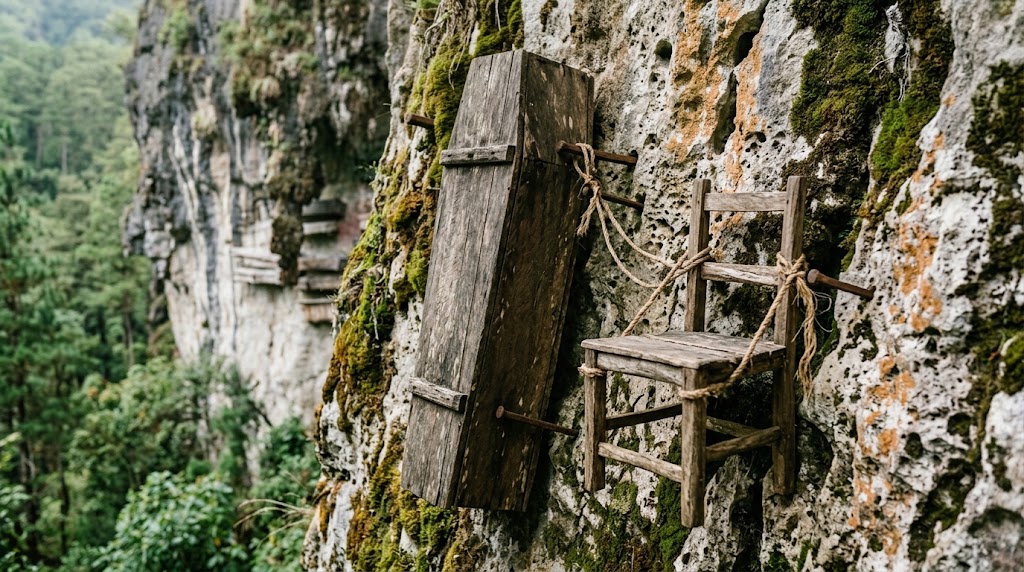 Close-up of weathered pine coffins anchored to limestone karst, with traditional funeral chairs suspended beside them.
Expedition Field Guide: How to Journey to Sagada
Visiting Sagada is one of the most rewarding highland cultural journeys in Southeast Asia, requiring deliberate overland transit through the Cordillera mountains.
Transit & Route
- From Manila: Board an overnight executive sleeper coach (such as Coda Lines) departing from Quezon City or Cubao directly to Sagada (roughly 12 to 14 hours via Banaue).
- From Baguio: Catch a morning GL Trans bus from Baguio Dangwa Bus Terminal along the scenic, winding Halsema Highway (highest highway system in the Philippines), taking approximately 5 to 6 hours.
Mandatory Protocols & Regulations
- Mandatory Municipal Registration: Upon arriving in Sagada, all travelers must immediately register at the Municipal Tourism Office and pay the modest environmental registration fee. You will receive an official receipt required for entry at all site checkpoints.
- Accredited SEGA Guides Mandatory: Independent trekking into Echo Valley or Lumiang Cave without an authorized local SEGA (Sagada Environmental Guides Association) guide is strictly prohibited. Guides ensure visitor safety and maintain cultural decorum.
- Strict Sanctity Protocols:
- Never touch, lean against, or disturb any coffin.
- Do not pick up or move bone fragments that may have naturally dislodged from decaying timber.
- Maintain quiet, reverent voices; Echo Valley amplifies every sound across sacred ground.
- Footwear & Trail Hazards: The trek into Echo Valley involves steep, slick clay trails, exposed pine roots, and jagged limestone scrambles. Wear broken-in trail running shoes or hiking boots with aggressive wet-traction grip.
The Verdict
The Hanging Coffins of Sagada are not a macabre display of death, but an awe-inspiring celebration of spiritual elevation and continuity. Suspended between earth and sky in the misty mountain air of the Cordilleras, these silent pine sentinels remind travelers that mortality need not mean vanishing into the cold earth—it can be a majestic, eternal ascent toward the light.