Rising abruptly from the churning grey swells of the East China Sea, roughly 15 kilometers (9 miles) southwest of Nagasaki port, stands a silhouette so formidable it resembles an imperial warship preparing for naval combat: Hashima Island, universally known across Japan as Gunkanjima (Battleship Island).
Surrounded entirely by imposing reinforced-concrete seawalls, this 16-acre rock reef was transformed by industrial conglomerate Mitsubishi into an undersea coal mining marvel. At its mid-20th-century peak, it packed over 5,200 residents into brutalist apartment towers—achieving a population density of 83,500 people per square kilometer, more than nine times the density of modern Tokyo.
Today, Gunkanjima is an empty, weather-battered labyrinth of crumbling concrete, rusted elevator shafts, and collapsed staircases—a silent ocean fortress reclaimed by salt fogs and Pacific typhoons.
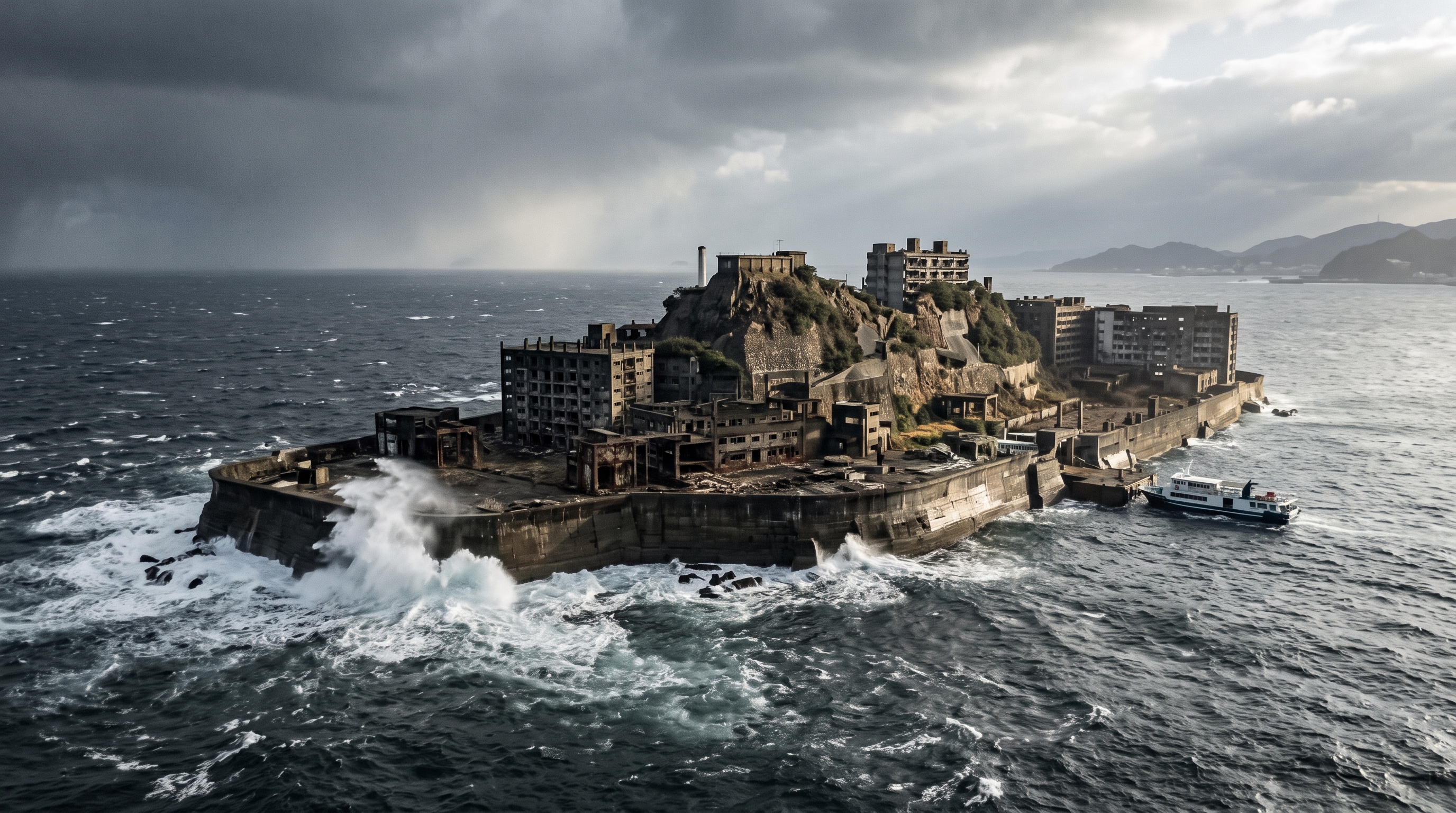 The unmistakable battleship profile of Gunkanjima, completely armored against the Pacific swells by concrete seawalls.
The Black Gold Rush: Mining 1,000 Meters Beneath the Ocean
Originally a barren, jagged reef where seabirds roosted, Hashima’s fate changed drastically in 1887 when high-grade undersea coal seams were discovered beneath the sea floor. Purchased by Mitsubishi in 1890, the corporation embarked on an unprecedented reclamation project, expanding the island to three times its natural size by dumping mine slag and constructing interlocking perimeter seawalls.
Miners traveled vertically down narrow, unventilated elevator shafts plunged over 1,000 meters (3,280 feet) beneath the ocean bed:
- Hellish Working Conditions: Deep subterranean galleries operated at stifling temperatures averaging 30°C (86°F) with 95% humidity. Saltwater regularly seeped through rock fissures, and workers labored in loincloths under the constant threat of lethal methane gas pockets and subterranean cave-ins.
- Fueling the Industrial Miracle: Despite the brutal conditions, the undersea pits yielded hundreds of thousands of tons of high-grade coal annually, providing the coking coal that powered the furnaces of the Yawata Steel Works and fueled Japan’s rapid pre-war and post-war industrialization.
The Concrete Microcosm: Vertical High-Rise Civilization
Because the island was completely locked inside seawalls with zero soil for horizontal growth, Hashima became a pioneering testing ground for vertical modern architecture.
In 1916, Mitsubishi constructed Building No. 30—Japan’s very first multi-story reinforced-concrete apartment building. Standing seven stories tall, it was designed specifically to withstand raging typhoon gales that routinely sent ocean swells crashing over the roofs.
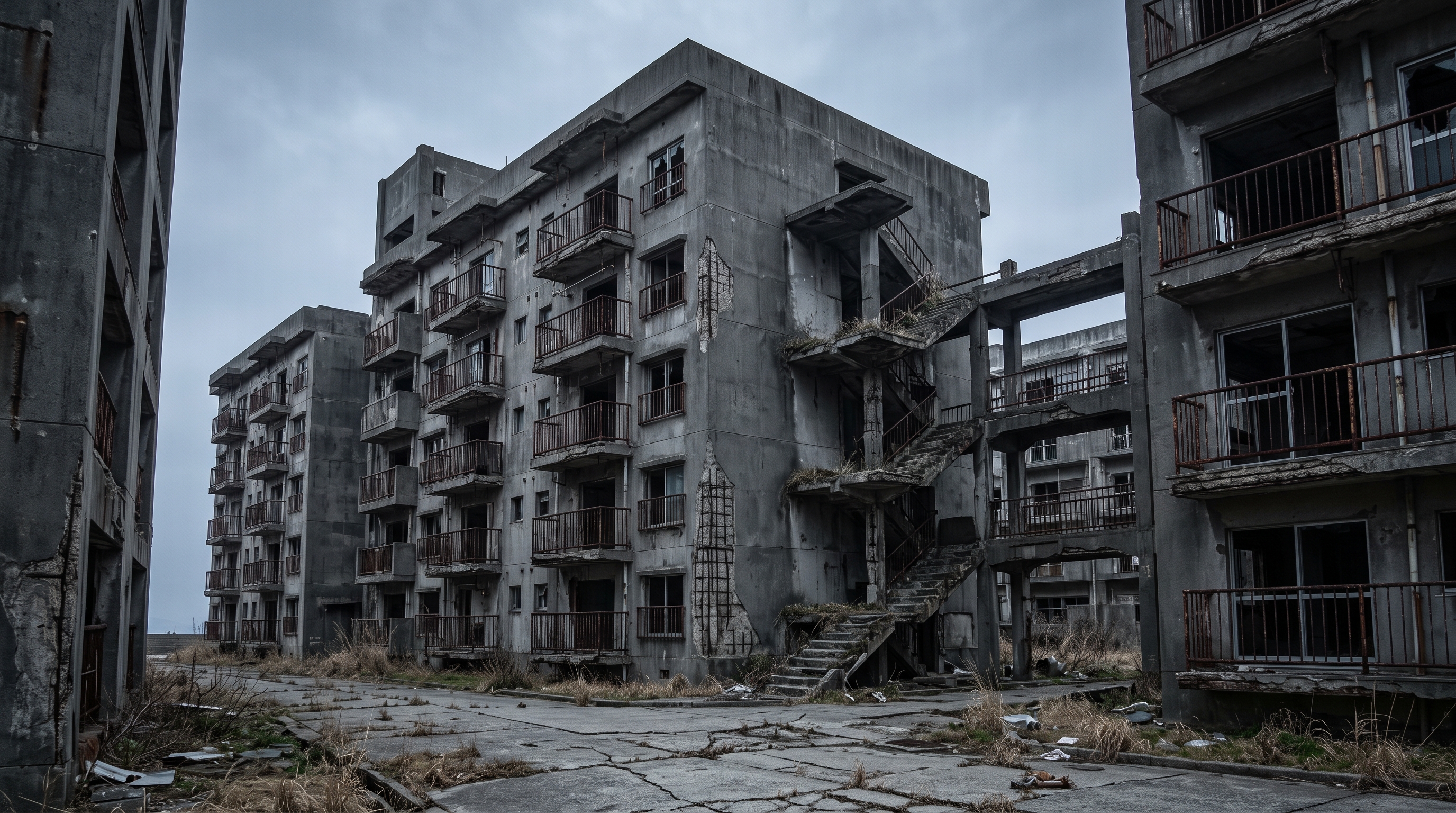 Building No. 30 and adjacent high-rises: skeletal concrete residential towers connected by labyrinthine aerial walkways.
Within decades, the island became a dense, self-contained micro-city:
- The Vertical City: High-rise towers were interconnected by a complex web of exterior staircases, sky bridges, and sheltered alleys. Residents could walk from kindergarten through high school, visit doctor clinics, and shop at subterranean markets without ever stepping out into seasonal rains.
- Civilian Amenities: Despite its remote oceanic isolation, Gunkanjima offered modern luxuries unheard of in mainland rural villages: communal baths, a cinema (the Showakan), hair salons, billiard halls, a swimming pool, and even rooftop gardens planted in soil shipped over from the mainland.
The Somber Footprint: Wartime Hardship
Beneath the narrative of architectural innovation lies a somber chapter of human suffering. During the Second World War (1939–1945), when Japanese miners were drafted into military service, the government forced thousands of conscripted Korean and Chinese laborers to work the deepest, most hazardous subterranean coal seams.
Subjected to severe malnutrition, physical brutality, and hazardous dust exposure, scores of laborers perished inside the damp tunnels or drowned attempting to swim across the open ocean toward Nagasaki.
In 2015, when Hashima was officially designated a UNESCO World Heritage Site under the Sites of Japan’s Meiji Industrial Revolution, international agreements required the Japanese government to formally acknowledge this dark history and honor the memory of the conscripted workers.
The Sudden Abandonment: 1974
The downfall of Battleship Island was swift. During the 1960s, Japan’s national energy policy pivoted decisively away from domestic coal to imported petroleum. Coal mines across the archipelago shuttered in rapid succession.
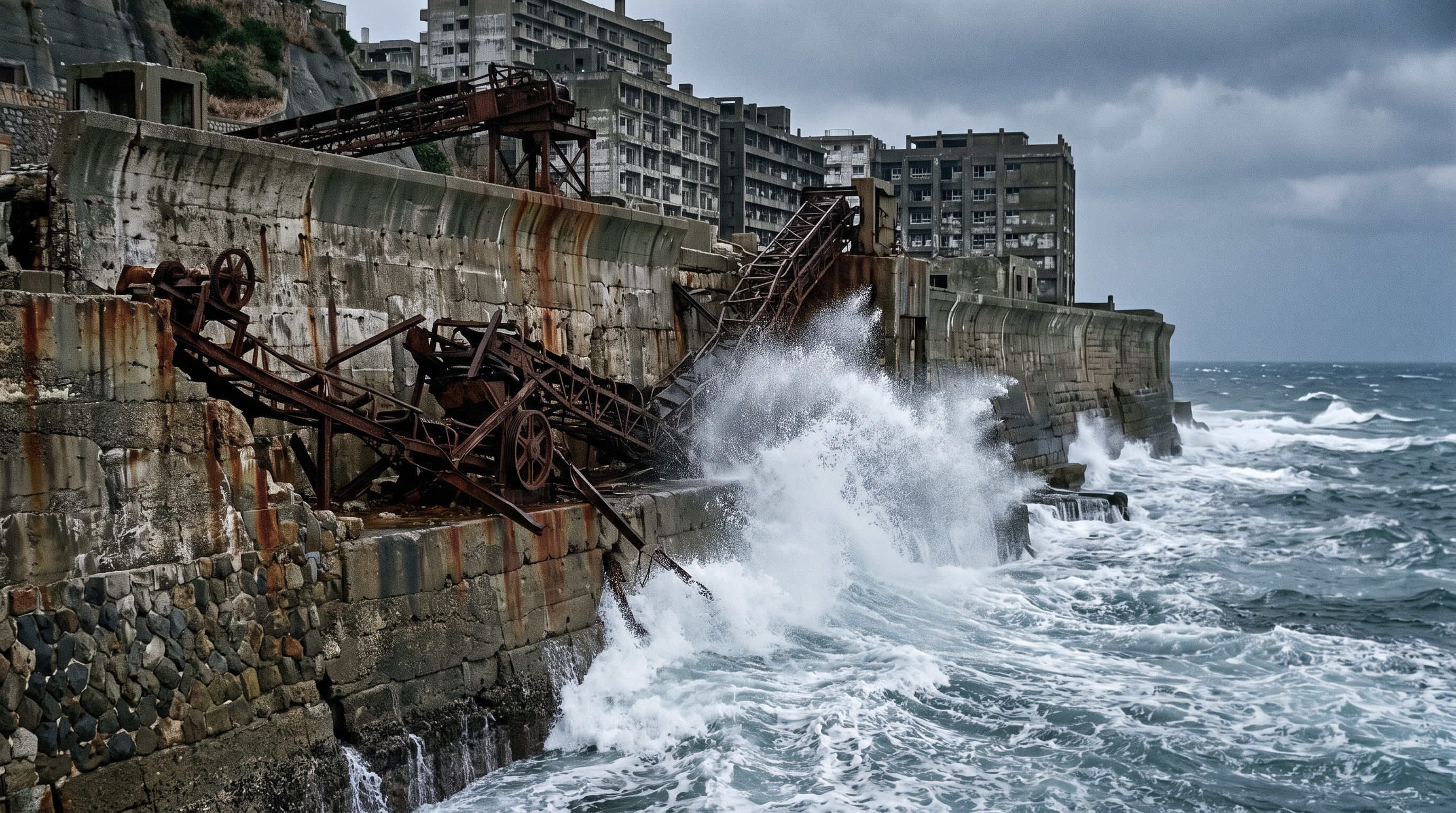 Collapsing steel conveyor cantilevers and coal processing facilities slowly dissolving into rust and ocean spray.
On January 15, 1974, Mitsubishi officially announced the closure of the Hashima coal mine. Within three months, the remaining workers and their families boarded evacuation ferries bound for mainland Nagasaki.
Because the exit was subsidized and rapid, residents left behind heavy household items: cathode-ray televisions, rotary telephones, children’s textbooks, sewing machines, and wooden furniture were left untouched inside apartments, sealing Gunkanjima as an authentic 1970s architectural time capsule.
Expedition Field Guide: How to Visit Gunkanjima Legally
After remaining strictly sealed for three decades, Hashima partially opened to guided historical tourism in 2009.
Ferry Logistics
- Departure Point: Guided boat tours depart daily from Nagasaki Port (ferry operators include Gunkanjima Concierge, Yamasa Kaiun, and Seaman Shokai).
- Weather & Ocean Swell Roulette: Landing on the island is heavily dependent on Pacific ocean conditions. Port safety regulations strictly prohibit boats from docking if waves exceed 0.5 meters or wind speeds exceed 30 knots. Approximately 20% to 30% of scheduled tours circle the island for photography without making landfall.
Critical Safety & Preservation Rules
- Confined to Designated Walkways: Due to structural collapse hazards, tourists are restricted to a reinforced elevated steel boardwalk constructed on the island’s southern edge. Stepping off the boardwalk into residential zones or entering crumbling buildings is strictly forbidden under municipal heritage law.
- Wear Low-Profile Footwear: The landing pier requires crossing specialized gangways over open ocean swell. High heels, flip-flops, and heavy sandals are prohibited by tour operators; wear sturdy, rubber-soled sneakers.
- Sun & Wind Protection: Hashima has zero natural shade, no functioning restrooms, and no drinking water. Bring bottled water, sunglasses, and windbreakers for the 45-minute open-water transit.
The Verdict
Hashima Island is a haunting monument to the raw velocity of industrial civilization. It demonstrates how swiftly human ambition can conquer an inhospitable ocean rock—and how quickly nature, through relentless salt and typhoon winds, can pulverize an empire of concrete back into silent dust.