Deep inside the high-Arctic archipelago of Svalbard, perched at a forbidding latitude of 78° North, sits an outpost that defies every rule of Arctic survival: Pyramiden.
Named after the stark, pyramid-shaped peak of layered limestone and sandstone towering above its harbor, this abandoned settlement was once the crown jewel of Soviet polar ambition. Framed by the turquoise-blue calving face of the Nordenskiöld Glacier and the icy fjords of Billefjorden, Pyramiden was designed to showcase the triumph of communism over nature’s harshest wilderness.
Today, the town is utterly deserted. Arctic gales whip through wide socialist-realist boulevards, fulmars nest in abandoned window ledges, and polar bears prowl between apartment blocks. Yet, because the high-Arctic air is so dry and permafrost locks the land in perpetual sub-zero temperatures, Pyramiden does not rot—it remains suspended in 1998, as if its 1,000 residents vanished only yesterday.
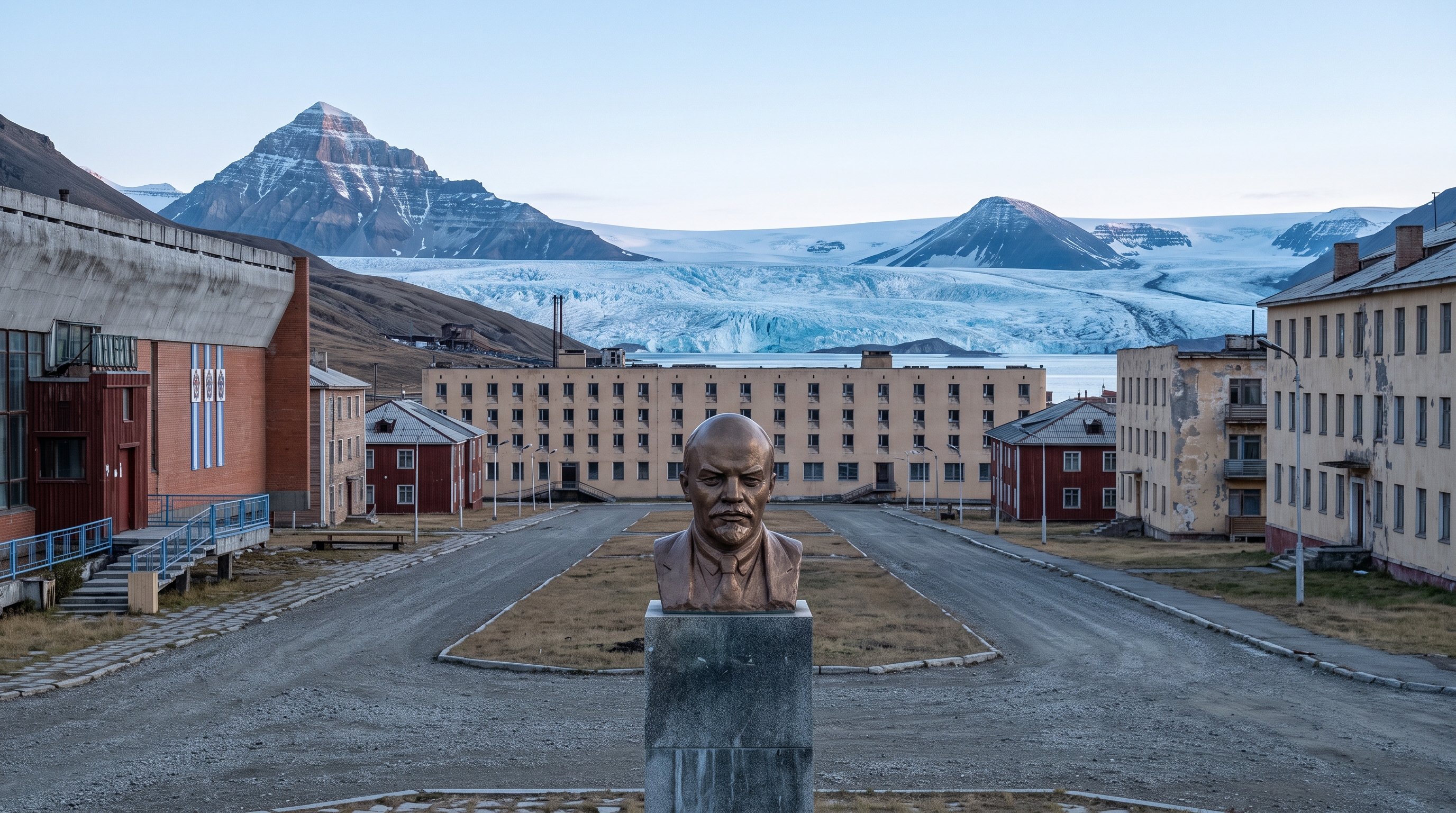 Pyramiden’s central boulevard: the world’s northernmost bust of Vladimir Lenin gazing out toward the Nordenskiöld Glacier.
The Geopolitical Anomaly: The Spitsbergen Treaty
How did a Soviet mining citadel exist on territory administered by Norway, a founding NATO member?
The answer lies in the Svalbard Treaty of 1920 (Spitsbergen Treaty):
- The Sovereign Paradox: The international treaty recognized Norwegian sovereignty over the remote archipelago, but granted all signatory nations equal commercial rights to establish hunting, shipping, and mining operations without paying local taxes.
- The Soviet Purchase (1927): Moscow acquired the embryonic coal concession from Sweden and assigned state trust Trust Arktikugol (Arctic Coal) to develop the mountain seams.
- The Cold War Window: During the Cold War, Pyramiden was not merely an extraction project; it was an ideological listening post and public relations showcase perched on NATO’s northernmost flank, entirely visa-free and populated by Soviet citizens.
The High-Arctic Utopia: Life at 78° North
Unlike the bleak gulag camps of Siberia, Pyramiden was built as an Arctic paradise to attract top-tier coal miners, engineers, and scientists from Russia and Ukraine.
Between the 1960s and 1980s, Arktikugol poured immense resources into the colony:
- Subsidized Luxury: Workers enjoyed free heated apartments, subsidized food in a massive 24-hour communal canteen, a hospital, a primary school, and an indoor sports complex boasting the northernmost heated seawater swimming pool on Earth.
- The Cultural Palace: The community center was equipped with a grand cinema hall, library, dance studio, and music rehearsal rooms. It houses the world’s northernmost grand piano, an upright Red October (Krasny Oktyabr) piano, standing silent beside velvet-lined auditoriums.
- The Imported Soil: Because polar permafrost cannot naturally support vegetation, Soviet supply ships brought tons of nutrient-rich Ukrainian black earth (chernozem) to lay down the “Northernmost Grass Lawn in the World” along the central boulevard, flanked by the bust of Vladimir Lenin.
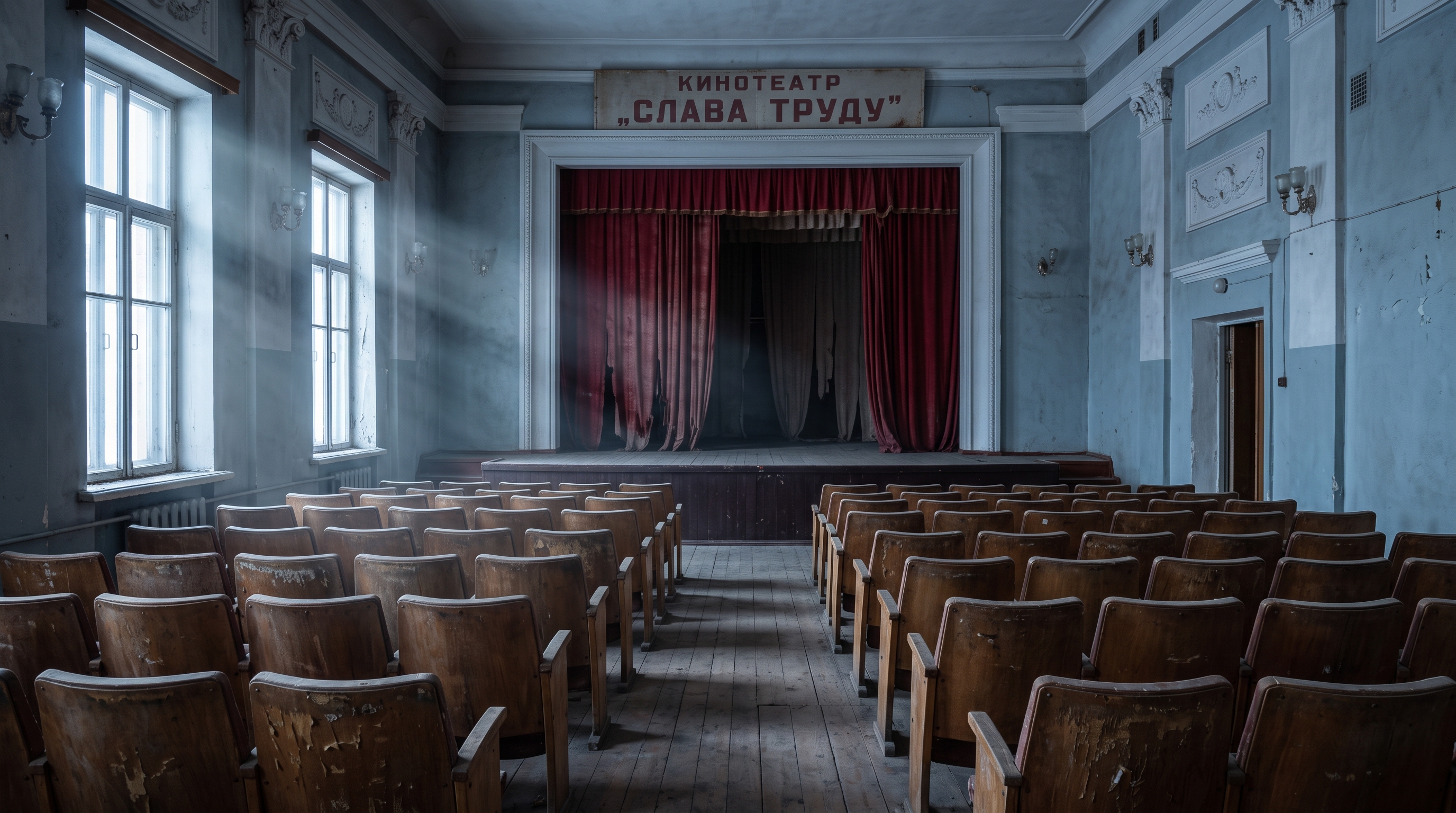 Inside the Cultural Palace: vintage wooden theater seats facing a silent stage under the Arctic twilight.
The Twilight and the Mountain Crash
The demise of Pyramiden began with the economic collapse of the Soviet Union in 1991, but its psychological death blow arrived on August 29, 1996.
Vnukovo Airlines Flight 2801, a chartered Tu-154 passenger jet carrying 141 Arktikugol miners, personnel, and their families from Moscow and Norilsk, was approaching Longyearbyen Airport in blinding fog. Navigational confusion caused the aircraft to slam directly into the sheer cliffside of Operafjellet (Opera Mountain), just 14 kilometers from its landing strip.
Everyone on board perished—a catastrophic loss that decimated nearly an entire generation of Pyramiden’s tight-knit leadership and mining workforce.
Struggling with grief, depleted coal seams, and subterranean mine fires, Arktikugol deemed the isolated outpost financially unsustainable. On March 31, 1998, the last extraction car of coal was hauled out of the mountain. By October, the final evacuation ships pulled away into the freezing fjord, abandoning the settlement to the polar winter.
The Frozen Time Capsule
Because the evacuation was abrupt and maritime freight space was severely limited, workers left their daily lives behind.
Step into the residential dormitories—humorously nicknamed the “London” (single men’s building) and “Paris” (women’s quarters)—and the permafrost preservation is striking:
- Untouched Domesticity: Potted plants dried stiff on kitchen sills, handwritten Cyrillic recipes pinned to corkboards, rotary phones on desks, and Soviet newspapers dated October 1998 lying beside unmade iron spring beds.
- The Library Archives: In the schoolhouse, geography textbooks depicting the borders of the USSR sit neatly in rows on wooden desks, chalkboard scribbles from final lessons still legible across the front walls.
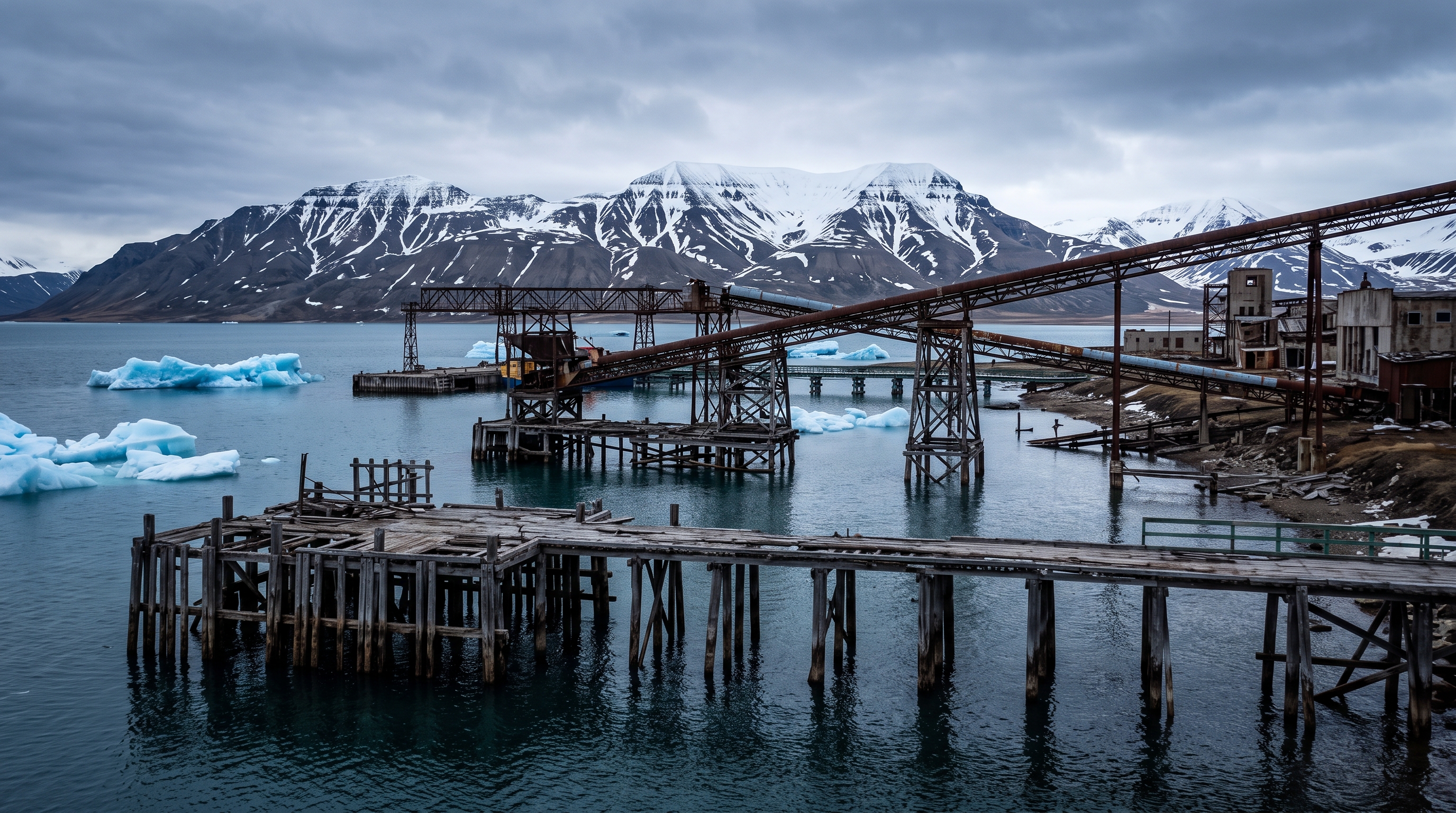 Weathered wooden shipping wharves and overhead coal transport rails slowly decaying along the icy shores of Billefjorden.
Expedition Field Guide: How to Journey to Pyramiden
Pyramiden sits completely off-grid, with zero road connections to Longyearbyen (the administrative capital of Svalbard). Reaching it requires specialized Arctic wilderness transit.
Logistics & Routes
- Summer Access (May–October): Day expeditions depart from Longyearbyen Port aboard reinforced ice-class catamarans or polar expedition boats (operating through outfits like Henningsen Transport Guides or Better Moments). The scenic maritime crossing through Isfjorden and Sassenfjorden takes roughly 2.5 to 3 hours each way.
- Winter Access (February–April): Once fjords freeze solid, Pyramiden can be reached via a rigorous full-day guided snowmobile expedition covering over 100 kilometers across glaciers, mountain passes, and pack ice.
Mandatory Polar Safety Protocols
- Polar Bear Defense Is Mandatory: Svalbard is the realm of the Ursus maritimus. It is illegal under Norwegian polar law to step beyond designated settlement limits without an authorized guide carrying a high-caliber hunting rifle (.308 or 30-06) and flare scare guns. Bears regularly forage inside the town’s open alleyways.
- Preservation Mandate: Under the Svalbard Environmental Protection Act, all historic artifacts, structural fixtures, and items dating prior to 1946 are legally protected cultural heritage, and modern Soviet items are preserved by contract. Removing even a single rusted bolt, newspaper clipping, or mineral rock is strictly prohibited.
- Sub-Zero Apparel: Even during the summer polar day, high Arctic winds can drop the perceived temperature well below freezing. Wear heavy thermal base layers, windproof Gore-Tex shells, insulated waterproof boots, and balaclavas.
The Verdict
Pyramiden is a singular monument to human defiance—an empire’s ideological monument cast into the deep freeze of the high Arctic. Standing beneath Lenin’s bronze gaze while calving glacier ice rumbles in the fjord beyond, you realize that while human empires rise and dissolve overnight, the Arctic ice claims everything in the end.