Roughly 33 kilometers (21 miles) off the subtropical coastline of São Paulo state, Brazil, a jagged green landmass erupts violently from the Atlantic Ocean: Ilha da Queimada Grande, universally known across the globe as Snake Island.
At first glance from a boat, the 106-acre sanctuary resembles an untouched tropical paradise, ringed by sheer granite cliffs and blanketed in lush Atlantic rainforest canopy. In reality, it is widely considered the most dangerous natural landmass on Earth. Stepping foot on its rocky shores is strictly illegal—a maritime quarantine enforced by the Brazilian Navy to prevent certain death.
The island is the exclusive domain of one of the planet’s rarest, most concentrated, and acutely venomous apex predators: the Golden Lancehead Viper (Bothrops insularis).
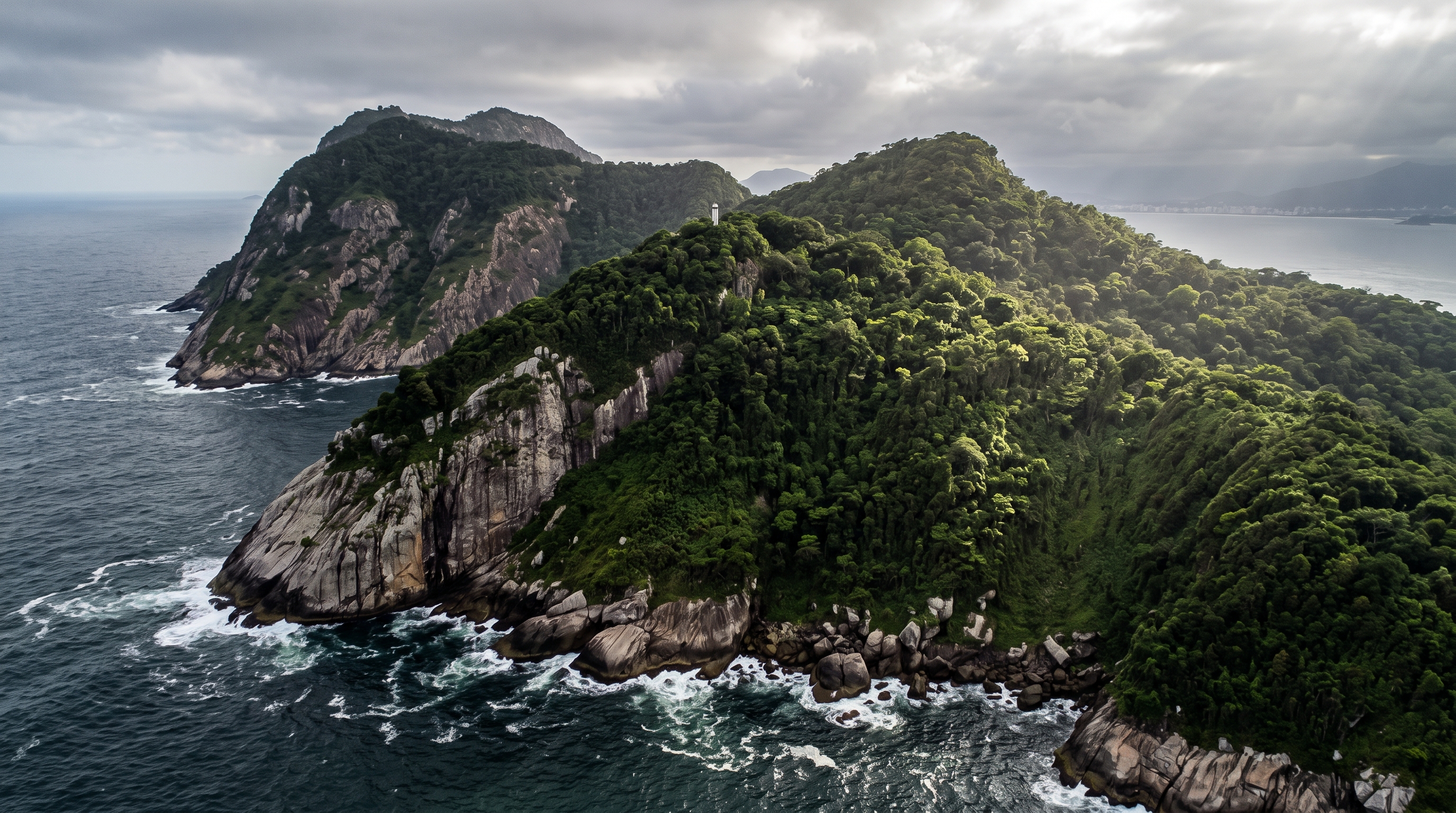 The imposing, wave-battered cliffs of Ilha da Queimada Grande, entirely off-limits to unauthorized vessels.
The Evolutionary Trap: 11,000 Years of Isolation
The lethal nature of Snake Island is a consequence of dramatic prehistoric geology. Approximately 11,000 years ago, at the close of the last Ice Age, rising sea levels inundated the continental shelf, severing the elevated ridge of Queimada Grande from mainland South America.
Trapped on this small island with zero ground predators and no native terrestrial mammals (such as rodents) to hunt, the stranded lancehead snakes faced immediate starvation. Their survival required a rapid evolutionary leap:
- Adapting to the Canopy: The snakes became arboreal, developing prehensile tails and specialized muscular coils to live entirely in the jungle canopy.
- Hunting Migratory Birds: Their sole food source became migratory seabirds that briefly roosted in the island’s treetops during continental flyovers.
- Flesh-Melting Venom: Mainland vipers bite a rodent, track the dying prey by scent, and swallow it. In the canopy, if a bitten bird flies out over the ocean before dying, the snake loses its meal. Consequently, the Golden Lancehead developed hemotoxic and neurotoxic venom three to five times more potent than any mainland pit viper—designed to induce instantaneous biological shock, dissolve muscular tissue, and kill birds mid-air before they can take flight.
Field researchers estimate that between 2,000 to 4,000 golden lanceheads inhabit the island’s 43 hectares—a terrifying density of roughly one deadly viper for every six square meters in prime forest patches.
The Ghost Lighthouse and Forgotten Lore
Human habitation on Snake Island was attempted only once. In 1909, Brazilian maritime authorities constructed a solitary white masonry lighthouse on the island’s highest elevation to guide freighters navigating toward Santos harbor.
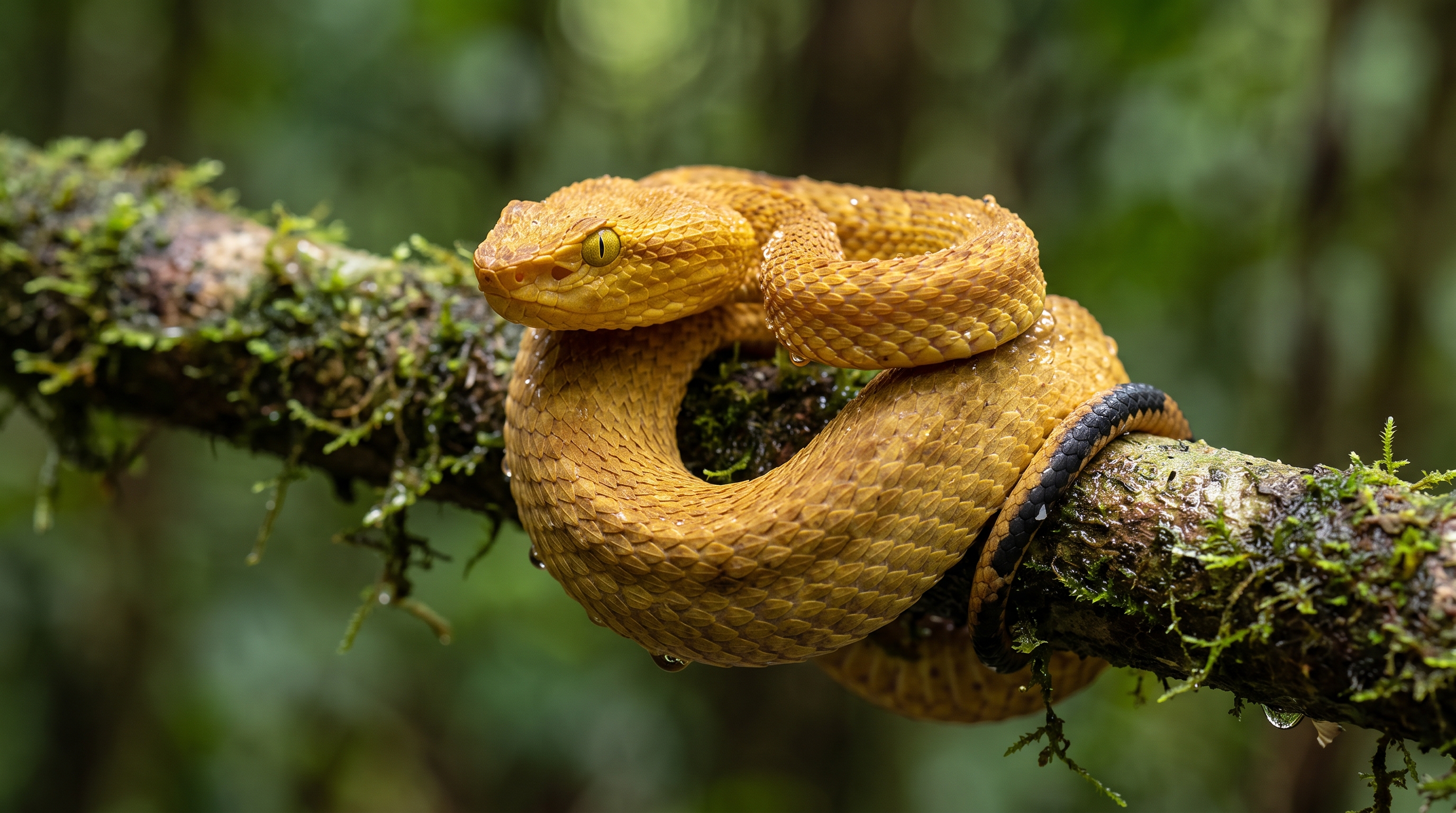 The Golden Lancehead (Bothrops insularis): an endangered, arboreal pit viper found nowhere else on planet Earth.
According to persistent maritime legend, the lighthouse was originally manned by a resident keeper, his wife, and their young children. Local lore recounts a horrifying nocturnal incident in the early 1920s: vipers allegedly crept in through cracked window panes, forcing the panicked family to flee through the pitch-black jungle toward their moored skiff—only to be bitten repeatedly by snakes hanging from low canopy branches.
While historians debate whether this tragedy occurred or was fabricated to deter looters, the documented historical reality remains striking: in 1925, the Brazilian Navy permanently evacuated all personnel from Queimada Grande. The lighthouse was decommissioned from manual operation and converted into a self-contained, automated solar-electric beacon. Once a year, an elite naval technical detachment lands on the rocky beach accompanied by anti-venom medical teams to service the batteries.
Why Visiting Snake Island Is Strictly Illegal
Stepping onto Ilha da Queimada Grande carries severe legal penalties and mortal peril.
1. The Navy Quarantine
Under Brazilian federal maritime law, unauthorized docking or landing on the island is a federal crime enforced by the Marinha do Brasil. Patrol vessels routinely scan the waters around the island.
2. Scientific Exceptions Only
The only individuals permitted ashore are accredited scientific expeditions—primarily herpetologists from the Instituto Butantan in São Paulo, the premier biomedical research facility responsible for venom study and antivenom production. Even approved scientists are legally mandated to have a certified military medical doctor equipped with specialized intubation kits and cold-stored antivenom present on the shoreline.
3. The Biopirate Black Market
The prohibition also aims to protect the snakes from human greed. Because the golden lancehead is critically endangered and its venom contains unique peptides under clinical investigation for blood pressure regulation and blood-clotting pharmaceuticals, a black-market specimen can command up to $30,000 USD among international wildlife collectors, prompting ruthless poachers (biopiratas) to risk their lives scaling the cliffs at night.
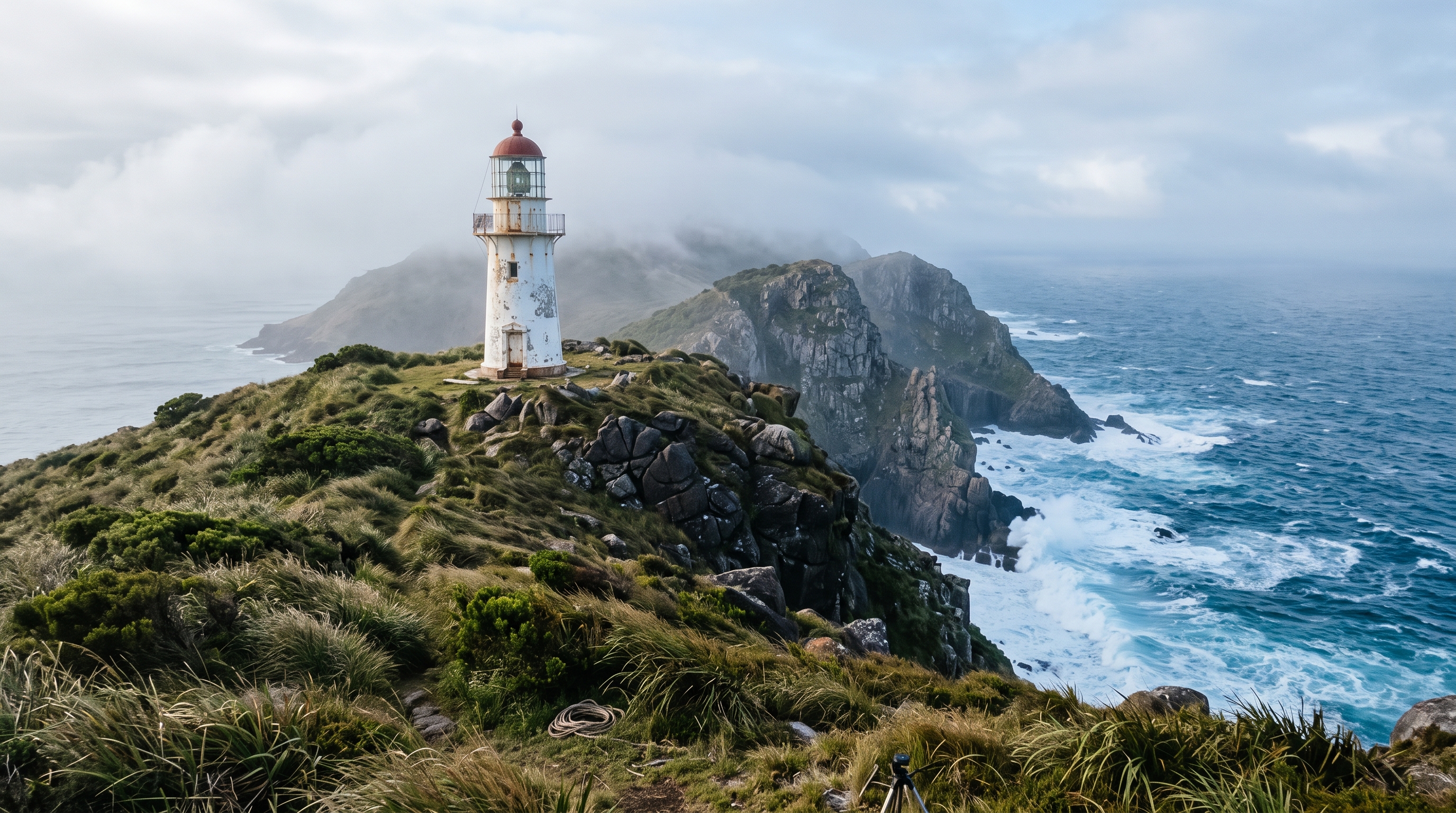 The historic 1909 automated lighthouse perched high on the wind-swept ridgeline above the snake sanctuary.
How to Experience Snake Island Legally
While landing on the rocks is banned, travelers can still witness this forbidding frontier from the water.
- Coastal Boat Charters: Specialized charter operators departing from the coastal towns of Itanhaém or Peruíbe offer offshore boat excursions around the perimeter of Ilha da Queimada Grande.
- Perimeter Observation: From the safety of a boat deck 100 meters off the rocks, visitors can observe the towering granite cliffs, view the historic lighthouse, and watch seabirds circle the dense green canopy that hides thousands of vipers.
- Open-Water Scuba Diving: The deep waters and submerged boulder formations immediately off the island’s rocky base are renowned for crystal-clear visibility, home to manta rays, sea turtles, and hammerhead sharks—providing an exhilarating marine adventure without setting foot on land.
The Verdict
Ilha da Queimada Grande is nature’s ultimate fortress—a primordial ecosystem where evolution turned a small granite rock into an impenetrable biological sanctuary. It serves as a humbling reminder of nature’s ferocity: a place where humankind is not the master, and where wilderness remains purely, unconditionally wild.