Stretching along the azure coastline of eastern Cyprus lies a sight that defies every expectation of a Mediterranean paradise: Varosha (Famagusta).
Viewed from the turquoise surf of the Levantine Sea, the skyline resembles a premier seaside metropolis: dozens of modern multi-story luxury hotels, beachfront apartments, and open-air cocktail terraces. But look closer through telephoto lenses, and the illusion crumbles. Windows are shattered voids, concrete balconies hang warped by rust and sea salt, wild eucalyptus trees burst through roofs, and miles of rusted chain-link fence, oil drums, and red military signage cordon off the boulevard.
Until July 1974, Varosha was celebrated as the French Riviera of the Middle East—a billionaire playground frequented by Elizabeth Taylor, Richard Burton, and Brigitte Bardot. Within forty-eight hours of military conflict, it transformed into an armed, sealed time capsule—a sprawling ghost city trapped in diplomatic purgatory for nearly half a century.
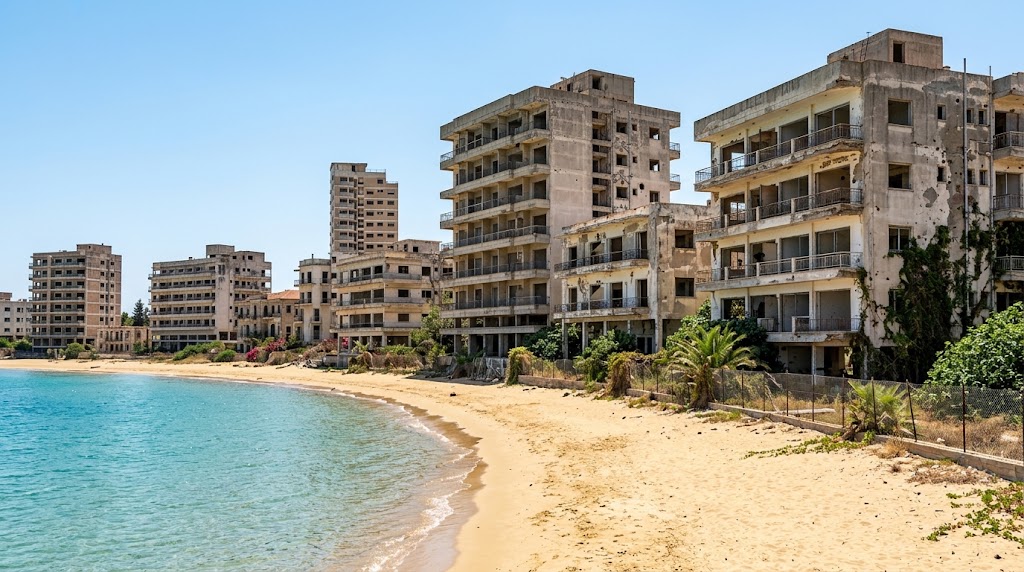 The skyline of Varosha: decaying 1970s luxury hotels standing silent along golden Mediterranean beaches.
The Golden Era: Hollywood on the Levantine Shore
In the early 1970s, Varosha was the indisputable economic engine of Cyprus, accounting for over fifty percent of the island’s total hotel accommodations:
- The Playground of the Elite: Over 10,000 hotel beds lined JFK Avenue, attracting European royalty, diplomatic delegations, and movie stars.
- The Modernist Mirage: The resort boomed with architectural innovation: brutalist concrete balconies, avant-garde swimming pools, open-air cinema pavilions, and high-end boutiques importing haute couture straight from Paris, Milan, and London.
The Forty-Eight Hour Evacuation: July 1974
The paradise evaporated on July 20, 1974, when Turkish military forces invaded northern Cyprus in response to a Greek-backed military coup d’état on the island:
- The Airstrikes: As fighter jets dropped ordnance over Famagusta and armored divisions advanced toward the resort strip, sheer panic swept the 40,000 Greek Cypriot residents and thousands of international tourists.
- The Temporary Illusion: Families fled toward the British sovereign base at Dhekelia with only the clothes on their backs, car keys in hand, and wallets snatched from side tables. Most genuinely believed they would return in three or four days once diplomatic ceasefires took effect. Breakfasts were left half-eaten on dining tables; laundry remained clipped to clotheslines.
When fighting paused, Turkish forces established the Green Line buffer zone. Varosha was entirely encircled by razor wire, designated an exclusive military forbidden zone (yasak bölge), and barred from human habitation by Turkish army garrisons and United Nations Peacekeeping forces (UNFICYP).
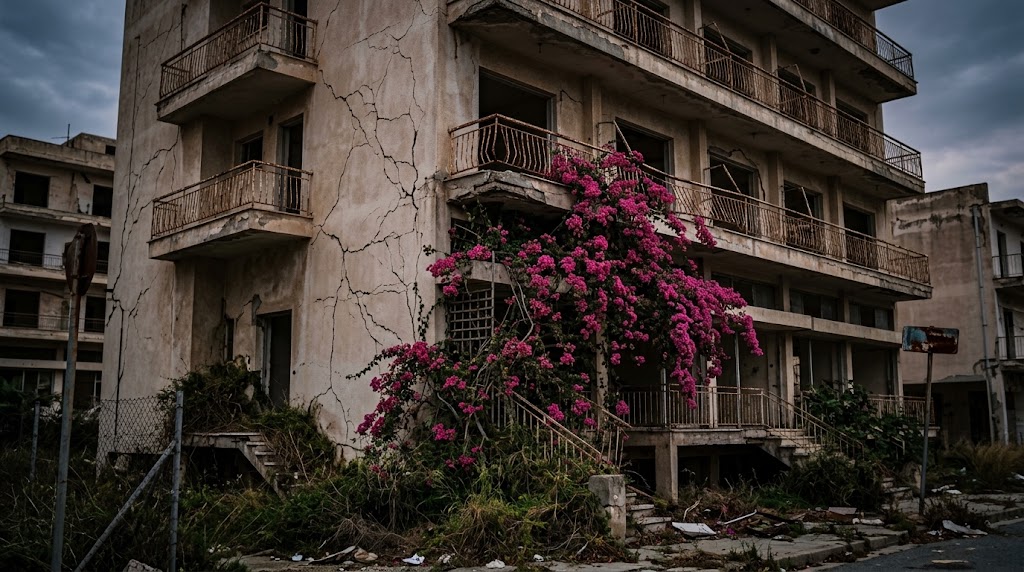 Shattered windows and overgrown wild bougainvillea reclaiming 1970s residential and commercial buildings.
The 46-Year Time Capsule Behind the Fence
For forty-six years, between 1974 and 2020, Varosha was completely off-limits to everyone except authorized Turkish military patrols and UN observers:
- The 1974 Car Showrooms: Inside local auto dealerships, pristine 1974 Toyota and Volkswagen models sat on deflated tires under inches of undisturbed gray dust, odometer needles reading single-digit delivery miles.
- The Boutique Mannequins: Behind dusty plate-glass windows along Democracy Avenue, retail mannequins still wore flared trousers, bell-bottom jeans, and floral mini-dresses from the 1974 summer catalog.
- Ecological Sanctuary: With human activity halted, nature staged an astonishing comeback. Endangered green sea turtles (Chelonia mydas) and loggerheads colonized the abandoned hotel beaches without disruption, while wild asparagus, hibiscus, and prickly pear cactus cracked through paved asphalt.
The Controversial 2020 Reopening
Under UN Security Council Resolution 550 (1984) and Resolution 789 (1992), any attempt to settle any part of Varosha by anyone other than its original inhabitants is legally inadmissible, with the district designated to be placed under UN administration.
However, in October 2020, the authorities of Northern Cyprus (TRNC), backed by Ankara, unilaterally reopened designated public streets and the beachfront of Varosha to visitors:
- The Transformation: Paved asphalt paths were laid, wooden boardwalks were built across the sand, and public bicycle rental stands were set up beneath the hollow, unstable ruins of bombed-out luxury hotels.
- International Backlash: The move drew immediate condemnation from the UN Security Council, the European Union, and displaced original property owners, who view the dark tourism infrastructure as an attempt to cement the permanent loss of their ancestral homes.
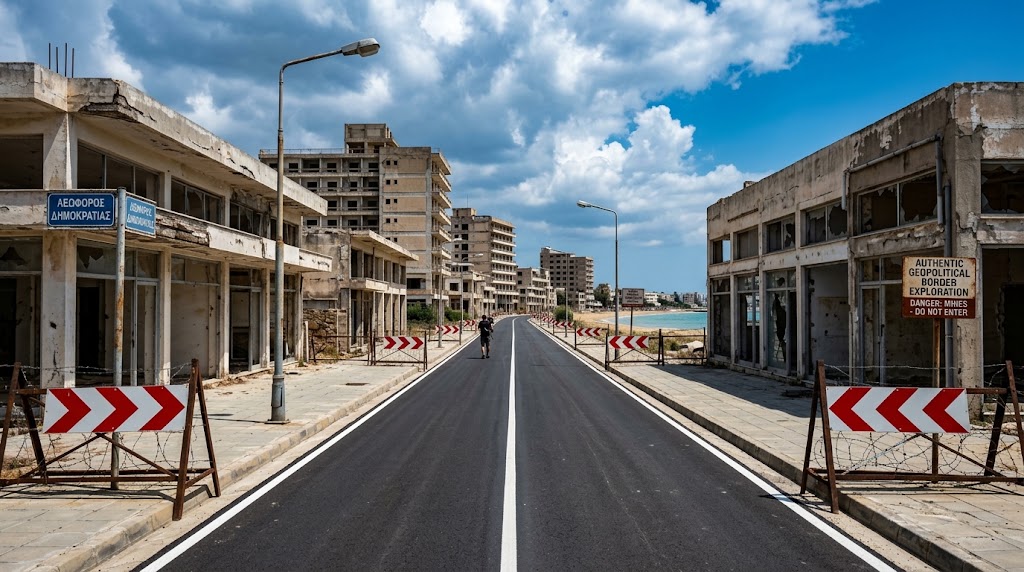 The paved visitor walkway winding through the restricted military zone past fenced-off, collapsing ruins.
Expedition Field Guide: How to Visit Varosha Legally
Varosha can now be visited as a daytime pedestrian and cycling excursion from the Turkish Republic of Northern Cyprus (TRNC).
Crossing Checkpoints & Logistics
- From the Republic of Cyprus (South): Cross the UN Green Line at the Deryneia (Derinya) Checkpoint in eastern Cyprus. You will need a valid passport to pass through the Republic border post and the Northern Cyprus immigration desk.
- Access Point: The official public entrance to the Varosha ghost quarter is located near the Dr. Fazıl Küçük sports complex in Famagusta.
- Operating Hours: Open daily from 8:00 AM to 8:00 PM in summer (closes earlier around 5:00 PM during winter months). Entry is completely free.
Essential Visitor Protocols
- Strictly Stick to the Paved Paths: Do not attempt to cross white tape, enter doorway thresholds, or step into building interiors. Many structures suffered structural shrapnel damage in 1974 and have decayed for half a century without maintenance; ceiling and balcony collapses are an active hazard.
- Photography and Drone Restrictions: Handheld camera and mobile phone photography of the ruined town and beaches is permitted. However, never photograph military watchtowers, armed soldiers, or security checkpoints marked with red skull-and-crossbones signs. Operating aerial drones is strictly prohibited and leads to immediate confiscation and arrest.
- Transportation Within the Site: The open zone spans several kilometers. Rental bicycles and golf carts are available at the front gates, making it easy to traverse the main avenue down to the public beach promenade.
The Verdict
Varosha is one of the most poignant geopolitical paradoxes in modern tourism: a pristine turquoise holiday coast framed by the silent concrete skeletons of a war that never truly concluded. Walking past its rusted balconies, you realize that while beach sands remain timeless, the empires, resorts, and political boundaries built upon them can dissolve in an afternoon.