Perched high atop a heavily forested limestone ridge southwest of Louisville, Kentucky, looms a five-story Tudor Gothic brick monolith that commands the skyline like an imperial asylum: Waverly Hills Sanatorium.
Built in an expansive, aerodynamic “batwing” crescent to catch sweeping drafts of hilltop air, Waverly Hills was constructed in 1926 (expanding an earlier 1910 wooden board clinic) to confront one of the most terrifying biological crises in American history: the rampant epidemic of tuberculosis, universally feared as the “White Plague”.
Today, stripped of its hospital beds, oxygen cylinders, and enamel chamber pots, the sprawling 180,000-square-foot fortress stands in a state of preserved atmospheric stabilization. Its endless, windowless open-air solarium verandas, cavernous boiler houses, and the infamous 500-foot subterranean Body Chute make it an internationally celebrated pilgrimage for medical historians, architectural preservationists, and dark tourism travelers.
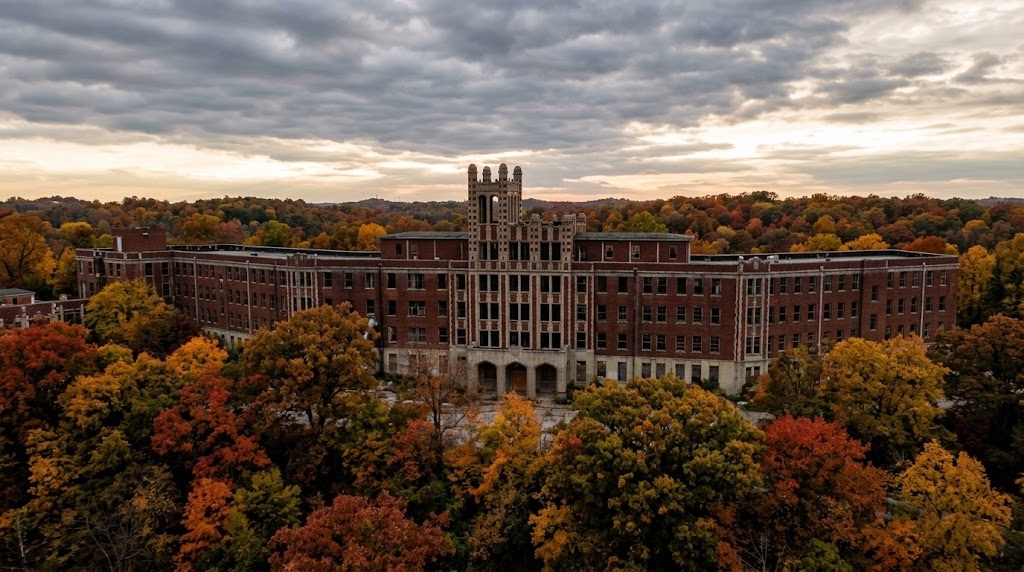 The imposing Tudor Gothic exterior of Waverly Hills Sanatorium, framed by dense Kentucky hardwood forest.
The Ohio Valley Crucible: The Scourge of the White Plague
In the late 19th and early 20th centuries, Louisville suffered one of the highest per-capita tuberculosis mortality rates in the United States.
The low-lying Ohio River valley was plagued by dense coal smog, extreme humidity, and seasonal swamp mists—ideal breeding grounds for Mycobacterium tuberculosis. The bacterium consumed victims from the inside out, causing violent coughing, hemorrhaging lungs, and severe muscle wasting:
- The Hilltop Sanctuary: Believing the disease was exacerbated by valley air, civic leaders acquired the hilltop estate of Major Thomas H. Hays in 1908. Architect D.X. Murphy & Bro. engineered a self-contained, fortress-like sanatorium city.
- Autonomous Enclave: Waverly Hills functioned as an independent municipal enclave. It maintained its own dairy farm, vegetable gardens, water filtration reservoir, dedicated post office, ice-making plant, and power station, completely severing physical contact between quarantined patients and the outside world.
The Pre-Antibiotic Frontier: Radical Therapies of Survival
Because the antibiotic streptomycin was not discovered until 1943 and only entered widespread civilian clinical use in the early 1950s, doctors at Waverly Hills had to rely on radical, pre-pharmaceutical interventions:
- The Fresh-Air Cure: Consumptive therapy mandated total exposure to fresh oxygen. Patients spent twenty-four hours a day, summer and winter, wrapped in multiple wool blankets on open concrete sleeping porches. During winter blizzards, nurses brushed snowfall off patients’ sleeping bags while hot water jugs were tucked beneath their feet to keep blood circulating.
- Sunlight and Ultraviolet Therapy: Giant quartz-mercury ultraviolet lamps bathed skin wards, while rooftop heliotherapy solariums exposed chests directly to solar radiation to arrest bacterial colonies.
- Invasive Surgical Interventions: For severe cases, thoracic surgeons performed experimental surgeries designed to rest the diseased lung:
- Artificial Pneumothorax: Needles deliberately punctured the pleural cavity to collapse the diseased lung lobe, starving the aerobic bacteria of air.
- Thoracoplasty: Surgeons excised several ribs from the patient’s chest cage, allowing the chest wall to collapse permanently inward over the infected cavity.
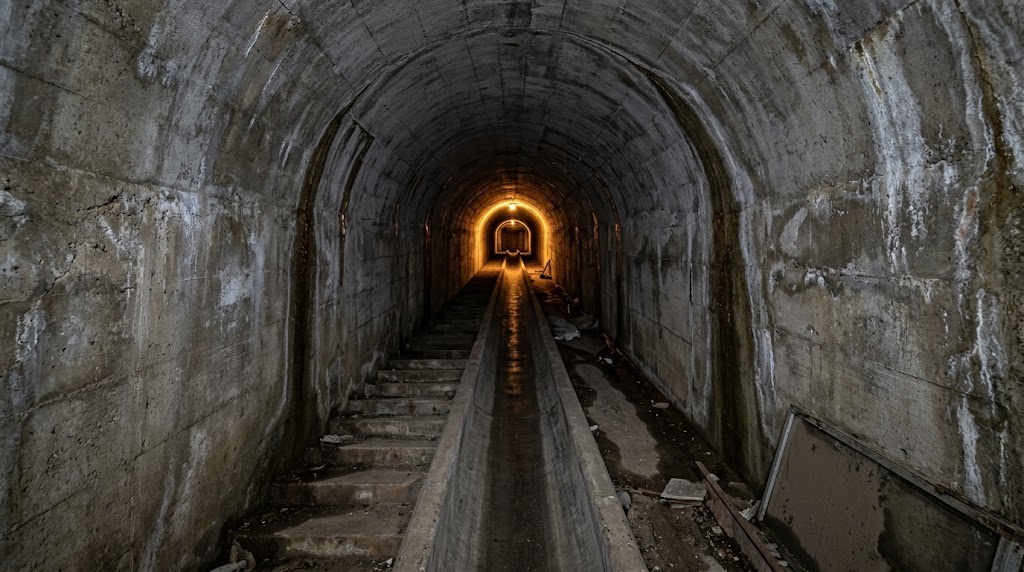 The Body Chute (Death Tunnel): a 500-foot concrete tunnel descending through the hillside to rail spurs below.
The “Death Tunnel”: The Anatomy of the Body Chute
Carved directly through the limestone hillside beneath the sanatorium lies the most historically infamous feature of the complex: The Body Chute (officially designated the Service Tunnel).
Measuring 500 feet (152 meters) in length and dropping down a steep 45-degree subterranean incline, this stone-and-concrete conduit connected the basement of the hospital directly to the railroad tracks at the base of the hill:
- The Practical Purpose: In winter months, the winding exterior hilltop road was frequently blocked by deep snow and ice. The subterranean conduit allowed coal deliveries, food freight, and building supplies to be hoisted directly up from train cars via an industrial motorized cable cart.
- The Morale Protocol: As the death toll rose during the peak of the epidemic, hospital administrators faced a psychological crisis. Watching hearse wagons constantly ascend the hill and witnessing deceased patients being wheeled out through front doors severely shattered the morale of surviving patients fighting for their lives.
- The Secret Evacuation: Doctors instituted a strict discreet protocol: deceased patients were lowered into the basement mortuary, loaded onto the motorized wooden cart inside the dark tunnel, and quietly transported down to awaiting hearse cars beneath the railway trestle under cover of night.
The Twilight, Woodhaven, and Modern Resurrection
By the mid-1950s, the widespread clinical success of streptomycin made mass quarantine sanatoriums obsolete. In 1961, Waverly Hills discharged its final tuberculosis patients and closed its doors.
The building underwent a brief, turbulent second life:
- Woodhaven Geriatric Center (1962–1982): The facility was converted into a state-run nursing home and psychiatric institution. Following chronic underfunding, severe staff shortages, and allegations of state neglect, the Commonwealth of Kentucky forcibly shut down Woodhaven in 1982.
- Decades of Vandalism: For nearly twenty years, the complex was abandoned. Vandals smashed all 10,000 window panes, painted graffiti across tiled surgery suites, and water damage caused plaster ceilings to collapse. At one point, a developer attempted to demolish the structure to erect a colossal religious statue, but legal preservation orders halted the wrecking balls.
- The Mattingly Preservation: In 2001, Tina and Charlie Mattingly purchased the ruined estate. Rather than razing it, they embarked on a multi-decade historic restoration and stabilization effort, funding roof replacements, window frame installations, and structural masonry work by opening the grounds to controlled historical tours.
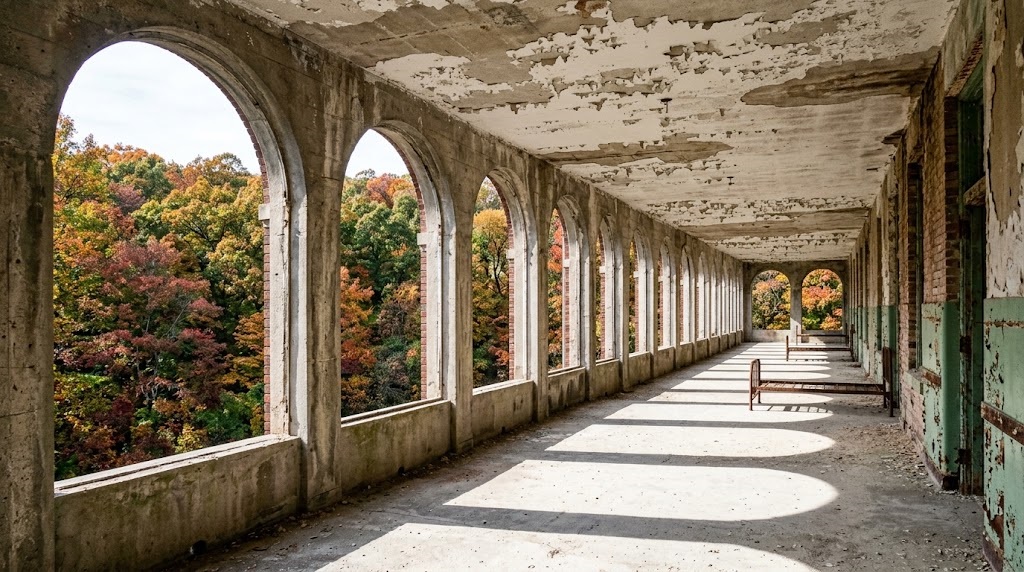 A sweeping open-air sleeping solarium on the fourth floor, where patients underwent year-round fresh-air cold cures.
The Folklore of Room 502
Beyond its physical architecture, Waverly Hills has generated an extensive body of modern folklore, centered predominantly on Room 502 on the administrative fifth floor.
According to institutional lore, two nurse tragedies occurred in this ward: in 1928, a 29-year-old unmarried head nurse was found dead by suicide, reportedly hanging from the ceiling rafters, followed in 1932 by another nurse who fatally plummeted from the exterior fifth-floor balcony. These documented workplace tragedies fueled decades of paranormal urban legends, featuring prominently on international television broadcasts and documentary investigations.
Expedition Field Guide: How to Visit Waverly Hills
Waverly Hills is private property situated within a gated estate. Trespassing outside of ticketed tour times is strictly prohibited, monitored by 24/7 on-site security guards and perimeter video surveillance.
Location & Directions
- Address: 4400 Paralee Drive, Louisville, KY 40272.
- Transit from Downtown Louisville: Located roughly 12 miles southwest of downtown Louisville. Drive south via the Dixie Highway (US-31W/US-60), turn onto Pages Lane, and follow Paralee Drive uphill through the gated entry.
Tour Options & Booking
- Daytime Historical Tours: Ideal for architecture, medical history, and photography enthusiasts. These 75-to-90-minute guided tours walk through all five floors, operating on weekends between March and November.
- Nighttime Ghost and Parannormal Investigations: Waverly Hills offers public 2-hour flashlight tours, semi-private 4-hour investigations, and exclusive all-night (8-hour) private building rentals for dedicated investigative teams. Slots for September and October sell out nearly a year in advance via their official online portal.
- Footwear & Environment: The sanatorium is an unrestored historic ruin with bare concrete floors, moisture leaks, and uneven stairs. Open-toed shoes, sandals, and high heels are strictly forbidden; wear durable work boots or hiking shoes. The building has no functioning climate control, so dress warmly in layers during spring and autumn evenings.
The Verdict
Waverly Hills Sanatorium is not merely an eerie Gothic shell; it is a sacred physical monument to human endurance. Walking through its breezy sleeping porches and descending into the cool silence of the Body Chute, travelers confront the profound heroism of early healthcare workers and the unyielding will of thousands who fought for every single breath atop this lonely Kentucky hill.